New
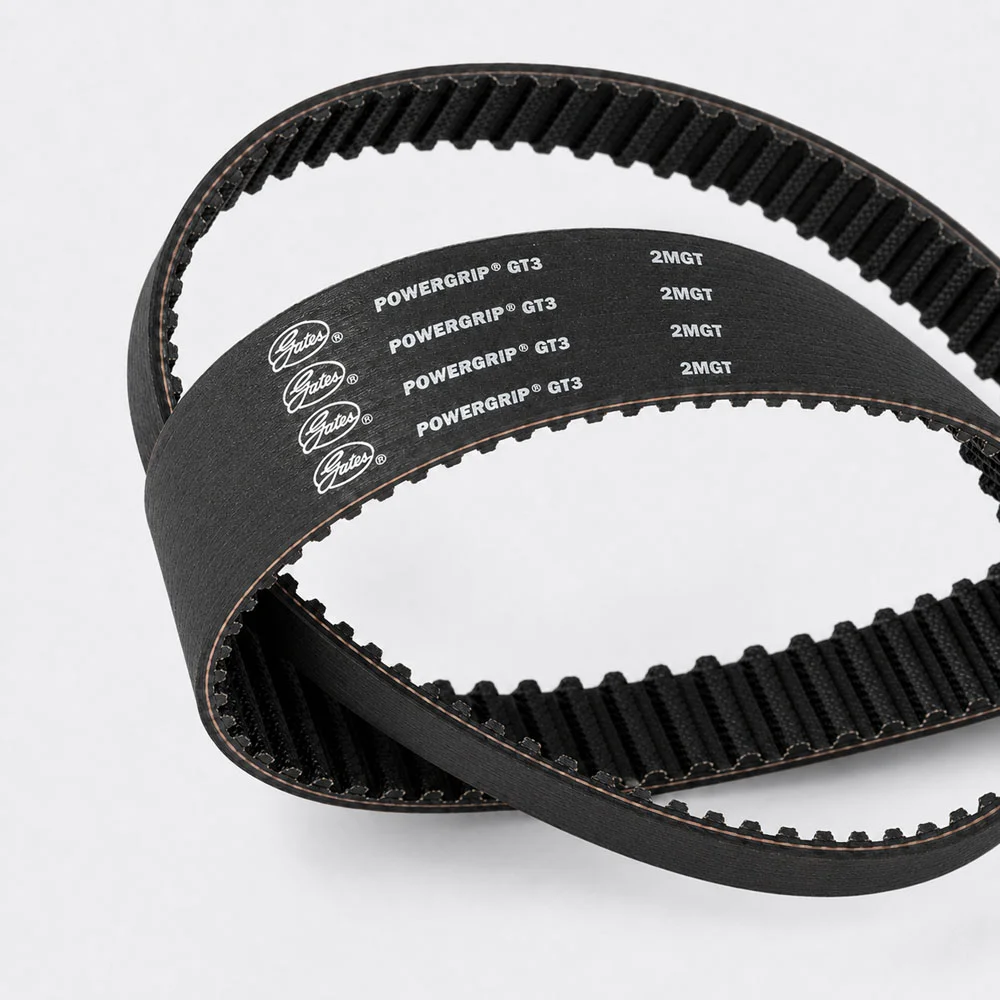


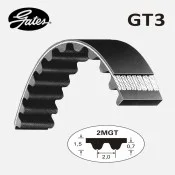


Gates Powergrip GT3 436 2MGT is an endless Gates Powergrip GT3 rubber timing belt for synchronous power transmission, where the belt's teeth engage the associated timing belt pulley and help keep the movement precise. The product has an effective length of 436mm, 218 teeth and the tooth profile GT3 2MGTThe material is chloroprene rubber, and the item is registered with ConCar / Gates item number GT3R043602003so that it can be found correctly during inventory checks and later purchases.
This product description is written so that both technicians and customers without much experience with belts can compare the product with the belt already installed in the machine. The most important information is profile, length, number of teeth and material. If this information matches your existing belt or the machine's spare parts list, you are a big step closer to choosing the right Gates timing belt.
Gates Powergrip GT3 is a range of synchronous rubber timing belts for precise power transmission. A synchronous belt works differently to a regular V-belt: the teeth on the belt mesh with the grooves in timing belt pulley , so that the movement follows the rotation of the pulley. This makes the type suitable when a machine needs to move, position or drive a shaft with repeatable precision.
The profile 2MGT means that the tooth pitch is 2mm. Tooth pitch is the distance from tooth to tooth measured along the belt. The fine 2 mm tooth pitch makes it easier to build small and precise belt drives, but the profile must match the timing belt pulley exactly. Therefore, the belt must be used with timing belt pulleys that match the same profile. An incorrect profile may look almost right, but it will usually not work correctly in the pulley.
Gates describes the 2MGT, 3MGT and 5MGT profiles as suitable for compact drives, including in precision and servo drives. In practice, this means that these profiles are often chosen where space is limited and where the belt drive must still operate stably and precisely.
It can be relevant in machine building, automation equipment, small transport solutions, packaging machines, adjustment mechanisms and other technical systems where the movement must be repeated precisely. It can also be used as a replacement belt when you have an existing Gates Powergrip GT3 belt drive and need to find a new belt based on dimensions and profile. In many cases, the text on the old belt, the spare parts list or the machine manufacturer's documentation can be used to find the correct combination.
A 2MGT belt like this is typically selected based on a combination of space requirements, load, pulley size and desired precision. 2MGT is typically selected when the belt drive needs to be compact and precise rather than heavily loaded. If you are in doubt about whether the profile is suitable, you should compare the tooth profile, effective length, number of teeth and width with the existing belt.
Start by checking the profile. Here is the profile GT3 2MGT. Then the effective length of the 436mm and the number of teeth on 218. These values are related: the length is equal to the number of teeth times the tooth pitch. For this belt, the calculation is 218 × 2mm = 436mm.
The next step is the belt width. The width must match the timing belt pulley and the space available in the machine. If the belt is too narrow, it may not be sufficient for the load. If it is too wide, it may collide with flanges, covers or other components. Therefore, always use the existing belt or the machine's technical documentation as a reference.
It is also important to check the timing belt pulleys. Worn or damaged timing belt pulleys can shorten the life of the belt, even if the new belt is correctly selected. Therefore, also check the pulley teeth, shaft alignment, belt tension and any bearings if the previous belt has worn abnormally quickly.
The belt is specified as a chloroprene rubber timing belt. Chloroprene rubber is often used in technical rubber belts because the material is robust in common machine environments. Gates describes the Powergrip GT3 series with neoprene/chloroprene rubber, glass fiber tensile cord and tooth coating, which is designed for wear resistance and stable operation. However, this does not mean that the belt is automatically suitable for all chemical environments. When in contact with special chemicals, high heat, oil baths or demanding process environments, compatibility should always be checked in relation to the specific machine.
A Gates Powergrip GT3 belt does not normally require lubrication in the same way as a chain drive. This makes the type practical in many machines where a clean, compact and precise belt drive is desired. However, correct installation is still important. Incorrect tension, skewed shafts or worn pulleys can cause noise, heat generation and a shorter service life.
This product can be searched for in several ways. Customers use terms such as timing belt, rubber timing belt, synchronous belt, timing belt and belt for timing belt driveThe different words in this context cover a timing belt for synchronous power transmission, where the profile, length and number of teeth must match the pulley.
If you are looking for a replacement belt, it is safest to use the specific technical data: 2MGT, 436mm, 218 teeth and Gates / ConCar part number GT3R043602003This reduces the risk of choosing a belt that looks similar but does not fit the machine.
No, not without checking the pulleys. A timing belt must match both the profile and the tooth pitch. A belt with almost the same length but the wrong profile can cause poor fit, noise and unnecessary wear.
First check the profile, effective length and number of teeth. Then check the belt width and pulley profile to ensure that the belt fits the entire belt drive and not just the length.
Yes, if you have the right information. Look for the profile designation, length, number of teeth and possibly the part number of the old belt. For this part, the key data is GT3 2MGT, 436mm and 218 teeth.
Replace the belt if it has ctiming bars, missing teeth, obvious wear, a glassy surface, abnormal noise, or if the machine loses precision. It may also be a good idea to check the pulleys and bearings at the same time so that the new belt is not stressed by an existing mechanical problem.
Gates Powergrip GT3 436 2MGT is a Gates Powergrip GT3 timing belt in chloroprene rubber with 436mm effective length, 218 teeth and the profile GT3 2MGT. It is relevant for synchronous belt drives where correct profile, length and number of teeth are crucial. Use the product data to compare with the old belt or the machine documentation, and always check belt width and pulley before ordering.