DISCOUNTED
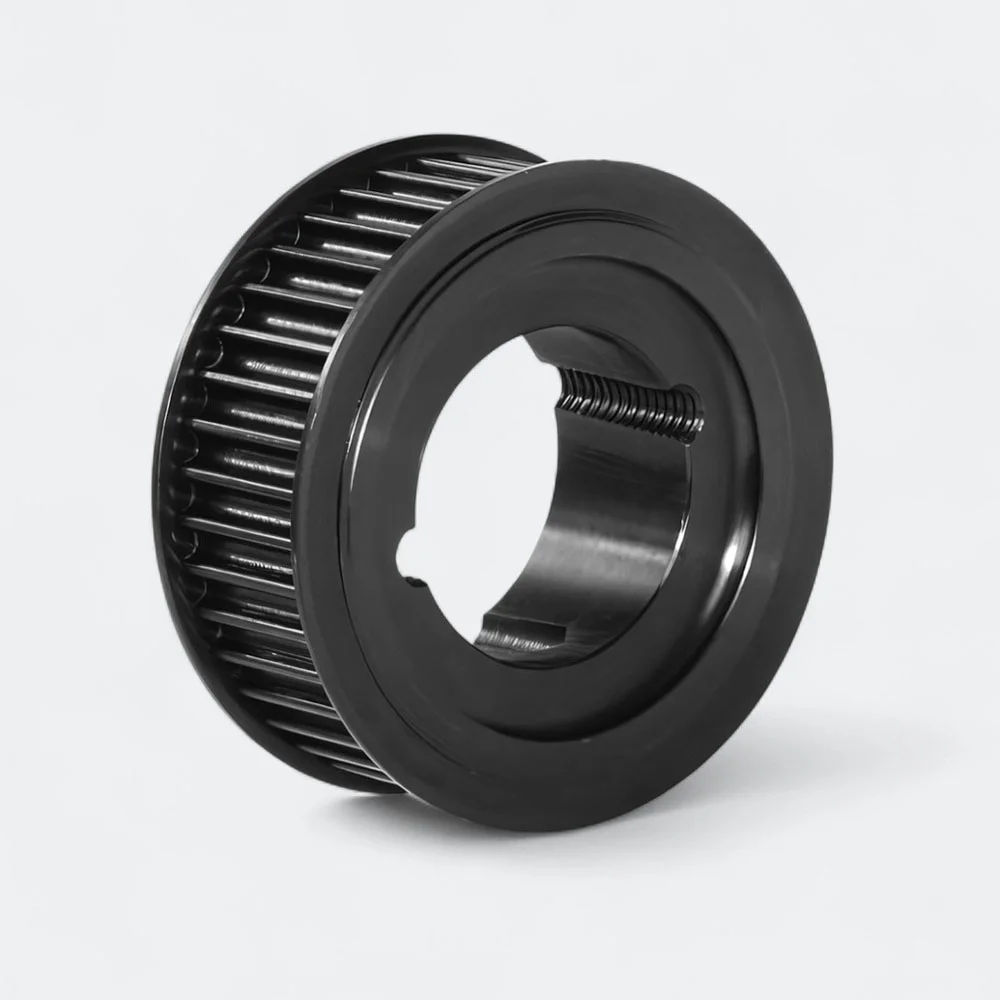




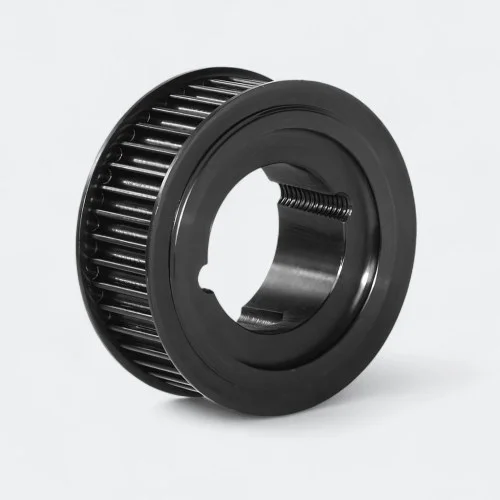
For HTD 8M timing belt pulleys with taper bushings, it is crucial that both the belt profile, belt width and taper lock type match. This description is therefore built around the dimensions that usually cause doubts in an order. Timing Belt Pulley 85 HTD-8M/40-2 with taper lock - Taper-lock 2012 is an HTD 8M timing belt pulley for synchronous power transmission with taper lock system. The pulley has 40 teeth, is intended for an 85 mm wide HTD 8M timing belt and uses taper bushing 2012. With the appropriate taper bushing, the shaft range covers Ø12-50 mm. This makes the product relevant when a standardized solution is desired, where the pulley can be mounted on several different shaft diameters without having to be specially drilled first. The taper bushing itself is selected according to the shaft diameter and is usually ordered separately, unless otherwise stated in the order.
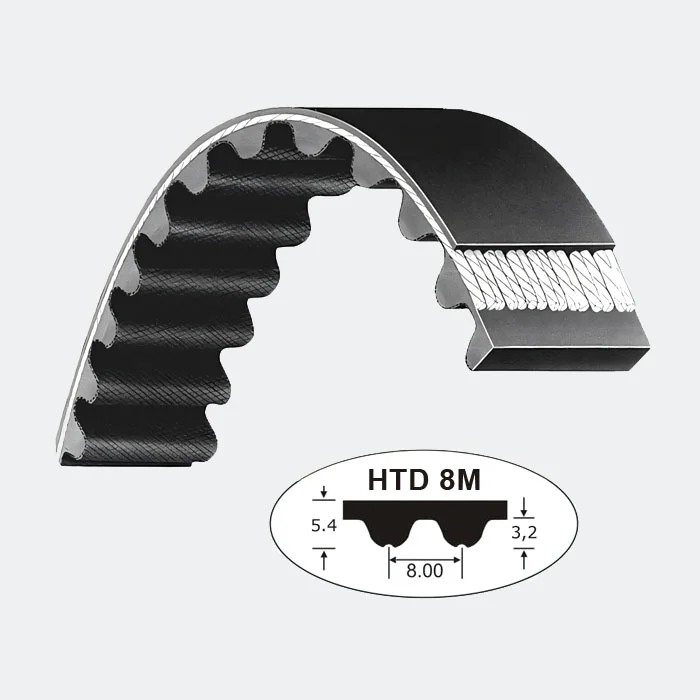
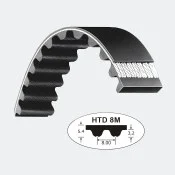
HTD 8M is a metric timing belt profile with 8 mm pitch and a rounded tooth shape, which is developed for positive engagement between the timing belt and timing belt pulley . In practice, this means that the belt does not work on friction alone, but transfers torque via the tooth engagement. This is an important difference compared to a regular V-belt drive, because the position, pitch and tooth profile of the belt must match exactly. Therefore, an HTD 8M pulley must always be combined with an HTD 8M belt of the correct width and length. 85 mm belt width is a powerful solution for wide HTD 8M belts, where the tooth engagement and contact surface must be able to handle a higher torque and a more loaded machine task.
The dimensions in this description are written from the supplier's technical data for the HTD 8M taper timing belt pulley in the specified belt width. The most important dimensions for this variant are collected here so that the item can be compared with a drawing, spare parts list or existing component. Pay particular attention to the taper-lock number, as the tapered hub of the pulley must fit the correct bushing type. For example, a taper bushing 1008 cannot be replaced by a 1615 or 2012, even though the shaft diameter may seem close. It is the hub taper itself, the length of the bushing and the screw location that determine compatibility.
The outside diameter is 100.49 mm, while the Pitch Diameter is 101.86 mm. The Pitch Diameter is the theoretical pitch diameter used when calculating gear ratio, belt speed, and center distance. The outside diameter, on the other hand, is the physical outer dimension of the pulley above the tooth tip. Both measurements can be relevant, but they are not used for the same purpose. If you are replacing an existing pulley, the number of teeth and profile should always be given more weight than simply measuring the outside diameter with a caliper.
This pulley is prepared for taper-lock / taper bushing 2012. The taper bushing acts as a conical clamping bushing between the shaft and the pulley hub. The advantage is that the same timing belt pulley can be used on several shaft diameters, as long as the bushing is the right type and has the correct bore for the shaft. For this variant, the relevant shaft range is Ø12-50 mm. This does not mean that the pulley itself has a continuous cylindrical bore in all these sizes; it means that the pulley fits with a taper bushing 2012, which is available in different bores within the specified range.
In a purchasing or service task, this type of component is often part of a larger bill of materials. The precise specification of the axle area, material type and belt width makes it easier to check whether the pulley corresponds to the existing design. When errors occur with taper-lock products, it is often because the taper bushing in the product name, short description and technical text does not match. In this updated text, the taper-lock number is therefore stated in several places and written into the product name so that it can also be clearly seen when processing orders. For this item, the correct taper bushing is 2012. If a taper bushing is already installed on the machine, the number on the bushing should be physically checked before reusing it.
The pulley is designed for HTD 8M timing belts with a belt width of 85 mm. The belt width must fit the belt, but it must also fit the load and safety factor chosen in the design. A wider belt drive can typically transmit more torque than a narrow belt drive, but also requires more space and correct alignment. This variant has 40 teeth, which gives a Pitch Diameter of 101.86 mm. It is the number of teeth that, together with the opposing pulley, determines the gear ratio in the belt drive.
The number of teeth is in a range where the pulley is often used as a standard pulley in common machine designs. This provides a reasonable balance between diameter, tooth engagement and space requirement in the design. If the pulley is used as a replacement for an existing timing belt pulley , the belt profile, number of teeth, belt width and taper-lock type should be checked before ordering. If used in a new design, the selection should be made in conjunction with calculations of centre distance, engagement number, load, starting torque, ambient temperature and any noise or maintenance requirements. The product here describes the timing belt pulley itself; the final dimensioning of the entire belt drive depends on the machine.
This variant is made of phosphated steel. The choice of material follows the number of teeth and size: variants up to and including 72 teeth are usually in phosphated steel, while larger variants from 80 teeth and upwards are in phosphated GG25 cast iron. The phosphated surface gives an industrial standard look and helps protect the surface during normal handling and splice. However, this does not change the fact that the pulley must still be stored dry and assembled correctly, especially if it is to be used in an environment with moisture, dust or frequent cleaning.
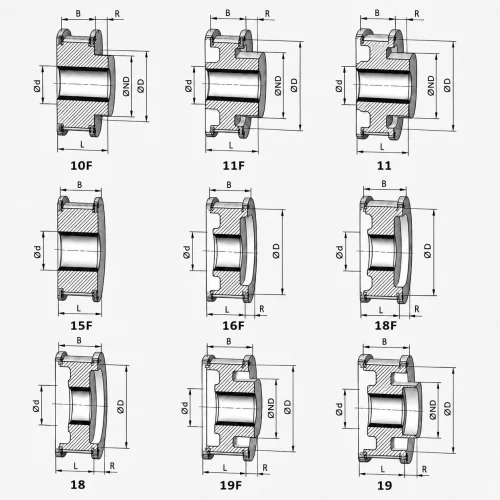
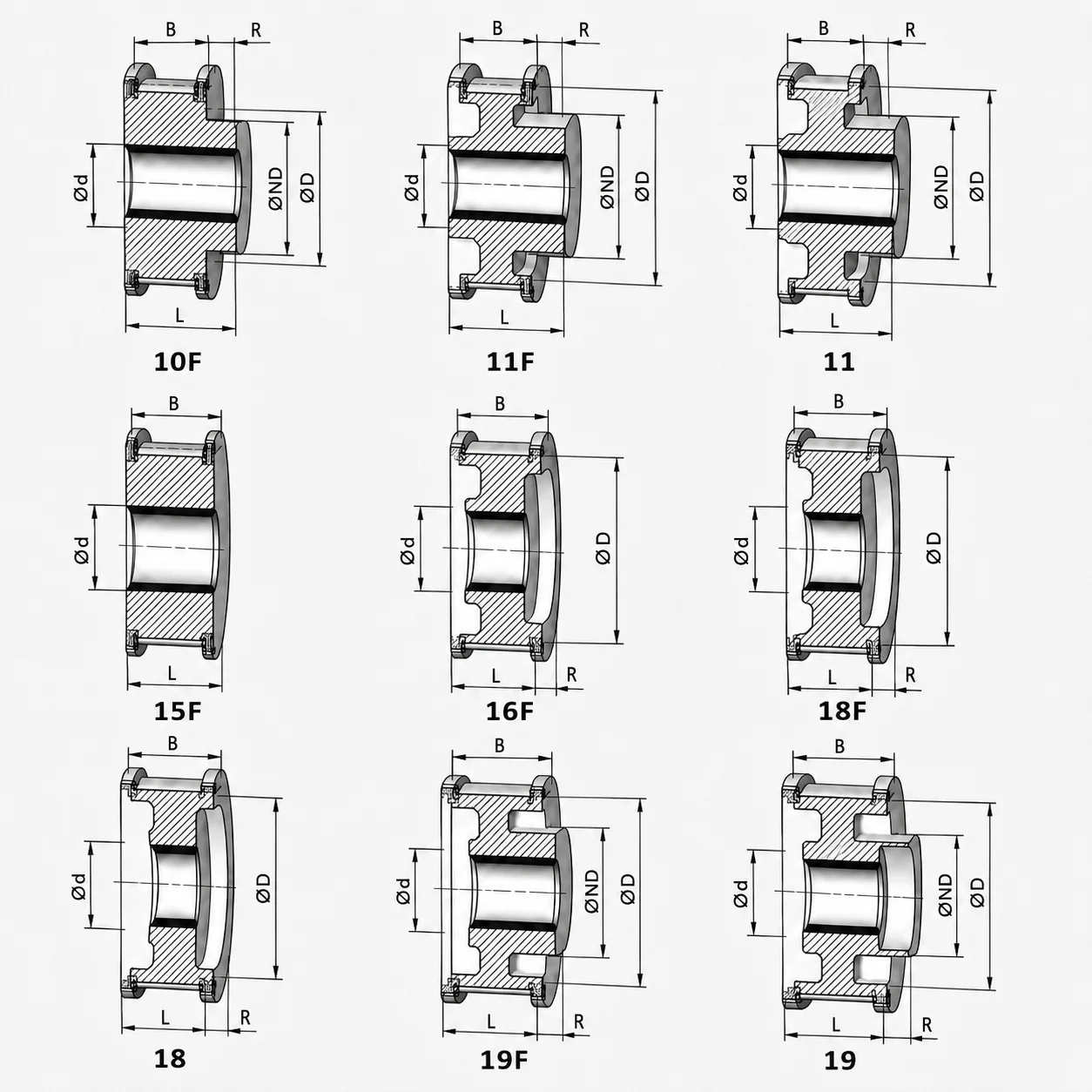
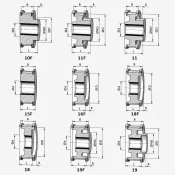
The design/version for this item is 18F. The version describes the pulley geometry in the supplier's drawing, including the relationship between hub, b-dimension, L-dimension, R-dimension and any flange. Total width (b) is 95 mm, L-dimension is 32 mm, and R-dimension is 31.5 mm. The pulley has a specified flange diameter of 106 mm. The flange/plate helps to guide the belt laterally, but correct alignment between the pulleys is still necessary because a timing belt should not run constantly against the edge. If you are comparing to an existing pulley, you should therefore not only look at the number of teeth and belt width, but also at the hub length and the dimensions that determine the location on the shaft.
After splice, the belt alignment should be checked with a straightedge or suitable measuring tool. A timing belt does not tolerate the same lateral movement as many V-belt pulleys, and an incorrectly aligned pulley can wear both the belt and the table pulley unnecessarily quickly. The Taper-lock system makes splice and dissplice easier than a fixed machined hub bore, but it still requires correct operation. Screws, cone surfaces and shaft must be clean. The bushing must not be forced into place with impact, and the pulley should not be tightened until it is aligned in relation to the other timing belt pulley . After a short run-in, it may be relevant to check the tension again, especially in systems where the load varies or where the machine runs many times a day.
A timing belt with HTD 8M profile must run cleanly in the tooth groove. If the belt wanders to the side, becomes hot, makes noise or shows uneven wear, it is rarely the tooth profile itself that is the cause. Check the parallelism between shafts, the flatness between the pulleys, the correct belt tension and whether the on-board pulleys/flanges affect the belt. Too high a belt tension can strain bearings and shafts, while too low a belt tension can cause tooth skipping during acceleration or shock loading.
This item is suitable when you need a HTD 8M timing belt pulley with 40 teeth, 85 mm belt width and taper-lock 2012. It does not automatically fit just because the outer diameter is close to an existing pulley. The correct check is: same profile, same number of teeth, suitable belt width, correct taper bushing and compatible shaft dimensions. If the machine uses a different tooth profile, for example T10, AT10, RPP or another HTD pitch, a different type of pulley must be selected.
First check the marking or dimensions of the existing timing belt. Then check the number of teeth on the pulley, belt width and taper-lock number. For this item, the key data is: 40 teeth, 85 mm belt width, taper-lock 2012, shaft range Ø12-50 mm and material Steel. If you also need to use the taper bushing, it must be selected in the same taper-lock type and with the specific shaft bore that fits the machine. This way you avoid ordering the correct pulley with the wrong bushing.