DISCOUNTED

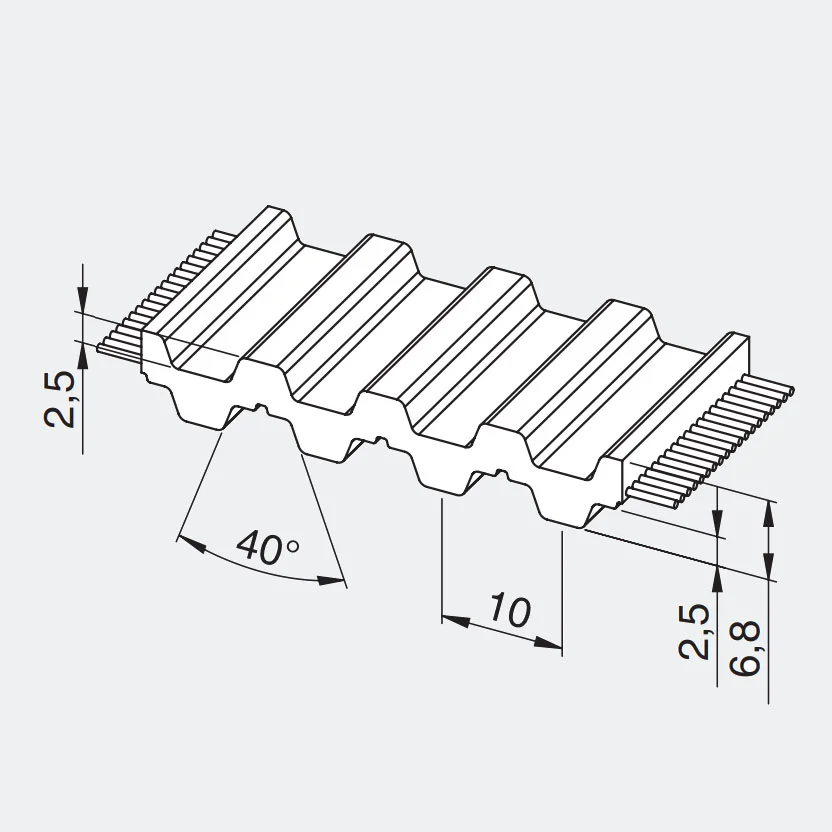
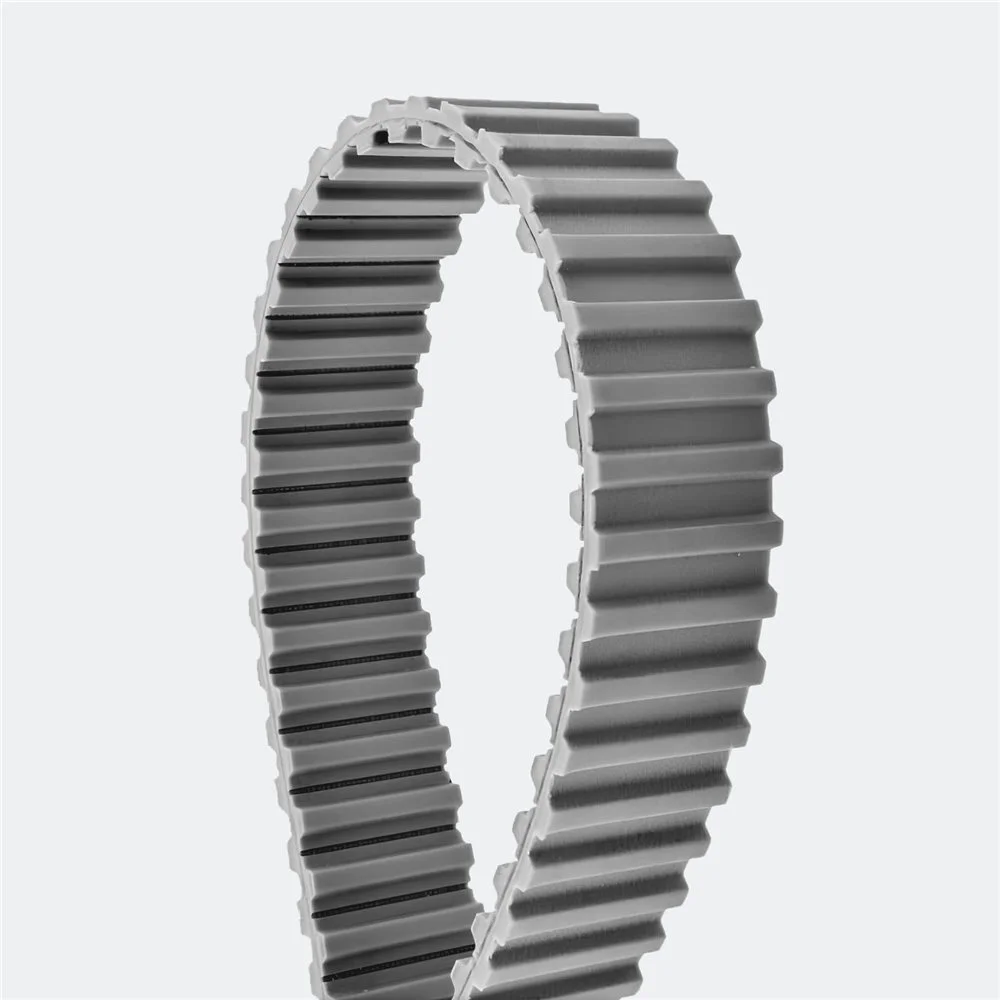
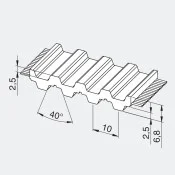


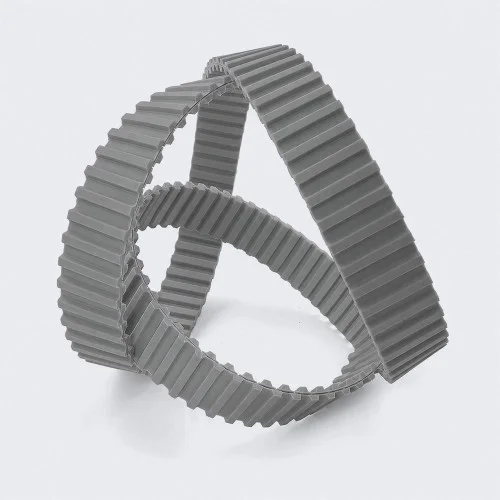
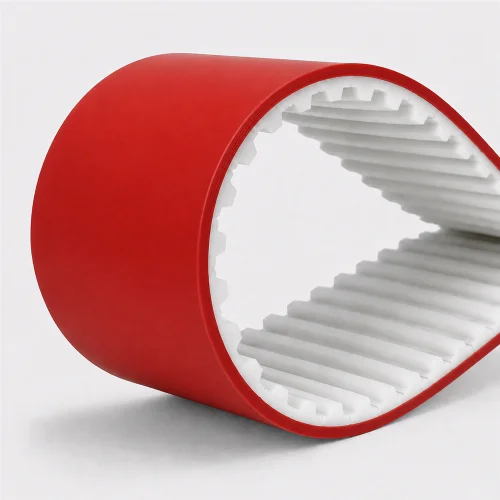
Double-sided timing belt T10 1210 DD - Megadyne Megapower is a Megadyne Megapower belt for customers who need a cast endless timing belt with teeth on both sides and high dimensional stability. The product has a pitch length of 1210mm, 121 teeth and profile T10The description is written so that both technicians and customers without much experience with timing belts can understand what the product is used for and what information should be checked before ordering.
Megadyne calls this type DD, while other brands often use DL for double-sided or double-timing timing belts. Therefore, the customer may encounter both designations, even though the practical function is the same: teeth on both sides of the belt. The text here uses both terms naturally, so that the product can also be found by customers searching for T5 DL, T10 DL, double-sided timing belt, double-timing timing belt, PU timing belt or Megadyne Megapower.
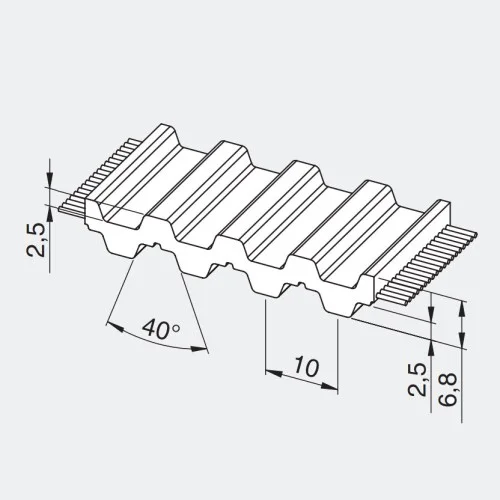
The most important information for Double-sided timing belt T10 1210 DD - Megadyne Megapower is profile, pitch length and number of teeth. In a synchronous timing belt drive, these data must match the pulley and center distance, otherwise the belt cannot work correctly. Megadyne describes pitch as the distance between two tooth centers measured on the belt's pitch line, and pitch length as the total length measured along the pitch line. These are therefore the key measurements when choosing a timing belt.
T10/T10DL standard catalogue widths are 10, 12, 16, 20, 25, 32, 50 and 75 mm. The Megadyne table shows T10/T10DL lengths with tolerances depending on the length range. The standard catalogue weight is given as 0.494 to 3.276 g/cm depending on the width, depending on the width the belt is cut into.
The double-sided construction makes this type of belt suitable for machines that involve multiple pulleys, counter-rotating shafts or a belt guide that cannot be solved with a regular single-sided timing belt. In contrast to a regular single-sided timing belt, this belt has teeth on both sides. This allows the designer to create more complex belt guides where the belt can drive or synchronize components from both sides of the belt. Typical applications for the Megapower series include office automation, medical equipment, packaging machines, plotters, robotic arms, electrical appliances, vacuum systems, vending machines, food machinery and textile machinery.
For a customer without much knowledge of belts, this simply means that the belt helps the machine move parts in time. The timing belt does not work like a friction belt, but engages with its teeth in the grooves of the pulley. This makes the solution suitable when position and repetition mean more than just getting something to rotate.
Most errors do not occur because the customer chooses a bad product, but because one of the technical details does not fit the machine. For Double-sided timing belt T10 1210 DD - Megadyne Megapower, you should especially check that the T10 profile, length 1210 mm, number of teeth 121 and the selected width fit the pulley and the machine's belt guide.
A double-sided timing belt can be a very effective solution, but it requires that the belt routing be well thought out. Both timing sides must work with correct engagement, and the belt must not be forced through a geometry it is not designed for. If in doubt, it is better to double-check the data than to order a belt that only almost fits.
For this item, the key data is T10, pitch length 1210mm and 121 teeth. T10 has a 10 mm tooth pitch and is typically chosen for larger and more powerful T-profile drives than T5. With long T10 belts, correct alignment, belt tension and pulley condition are particularly important. If you are replacing an old belt, you should compare the belt marking with the machine documentation and with the dimensions listed on the product page.
You should check four things in particular: tooth profile, length, number of teeth and width. The tooth profile determines whether the teeth fit in the pulley. The length and number of teeth determine whether the belt fits the center distance. The width determines whether the belt has the right contact surface for the load. If one of these pieces of information is incorrect, the belt may look right, but still cause noise, rapid wear, incorrect engagement or, in the worst case, a stoppage.
Megadyne Megapower belts are cast timing belts made of thermosetting polyurethane. The catalogue highlights, among other things, wear and abrasion resistance, dimensional stability, low noise, low installation stress and the possibility of compact drive dimensions. The standard version uses zinc-coated steel cords as the tensile element. This helps to provide high tensile strength and low elongation, which is important in synchronous drives.
The double-sided design does not change the basic requirement of correct sizing. The belt must fit the correct pulleys, have the correct width, correct length and correct tension. If the belt is chosen correctly, it can provide a precise and reliable solution for machines where timing, position and repeatability are all important.
A double-timing timing belt must be installed in a clean and correctly aligned belt drive. The pulleys must fit the profile, and both sides of the belt must have correct tooth engagement where they are in contact with the pulleys. Too low a tension can cause teeth to skip or unstable operation. Too high a tension can unnecessarily strain bearings, shafts and the belt. The correct tension should therefore always follow the machine or constructor's instructions.
Also check that the belt does not rub against fixed parts and that any back-facing pulleys or runners are suitable for the belt design. In particular, in omega drives and multi-shaft drives, small errors in alignment can have a major impact on the service life. If the belt quickly heats up, makes noise or shows uneven wear, the entire belt drive should be examined before a new belt is fitted.
Double-sided belts are often used when there are pulleys on both sides of the belt. Whether a specific belt fits depends on the pulley, tooth engagement, load and belt width.
A T5 belt will not fit a T10 pulley and vice versa. Incorrect profile can cause poor engagement, noise, wear or stoppage of operation.
No. The length is important, but you also need to check the profile, width, number of teeth and whether the belt should be double-sided.
Double-sided timing belt T10 1210 DD - Megadyne Megapower is a double-timing Megadyne Megapower timing belt in T10 profile with a pitch length of 1210 mm and 121 teeth. It is relevant for synchronous drives, where teeth on both sides of the belt must be used in the machine's belt guide. The belt should be selected based on profile, length, number of teeth, width and the specific operation of the machine. DD and DL are used in practice as designations for double-sided timing belts, but the technical dimensions should always be checked before ordering.
FEC can help compare data if you have the marking from the old belt, a photo, a drawing or information about the pulleys. The more information there is, the more certain the choice of the right timing belt will be.