New
DISCOUNTED


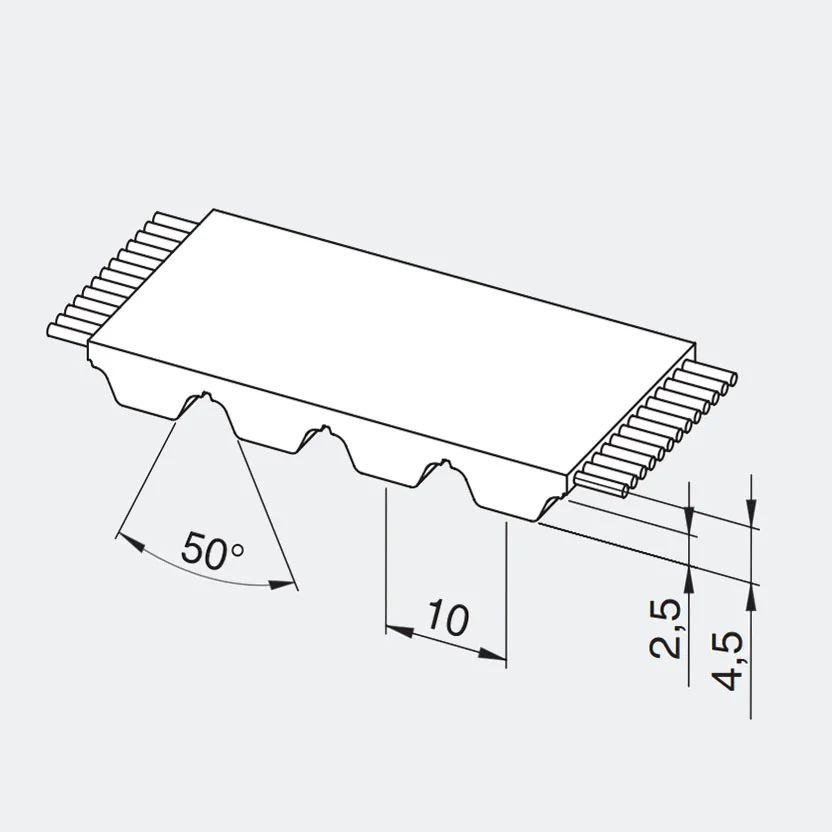




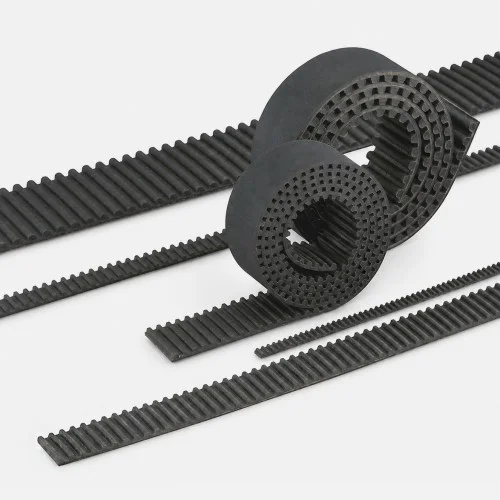
The Conti Synchroflex AT10 GEN III 730 combines a precise AT10 GEN III tooth geometry with a molded polyurethane body and longitudinally stable steel cord tension elements. The product has 73 teeth and a 730 mm pitch length, which corresponds to a tooth pitch of 10 mm. The belt is used in synchronous drives where uniform movement and reproducible position are more important than the elasticity normally associated with a conventional V-belt or flat belt. The GEN III version is the reinforced high-performance construction with red high-performance polyurethane and a denser, two-filament steel cord. It should therefore be treated as a separate product series and not as the usual standard version.
The technical data below describes the part of the product that does not change when a different belt width is selected. Pitch length, tooth pitch and number of teeth remain identical for all width choices. However, the width affects the available belt cross-section width and the price calculated on the product page. Correct sizing must always take into account torque, speed, number of teeth in mesh, pulley diameters, service factor and any counter-bending.
In a synchronous belt drive, the movement is transmitted through the tooth flanks. The geometry of the AT profile is therefore crucial for both load distribution, noise level and position accuracy. A correct AT pulley supports the teeth according to the profile to which they are cast. If the pulley's tooth shape or pitch deviates, the load can be concentrated at a few pu and cause abnormal wear, even though the belt can apparently be mounted.
The belt body consists of wear-resistant polyurethane, which encloses high-strength steel cord. The materials each have their own function: PU forms the teeth and protects the belt against mechanical wear, while the cord tensioning elements provide high longitudinal stiffness and limit post-elongation. Continental describes the design as maintenance-friendly and lubrication-free. This does not mean that the drive can be ignored; pulleys, alignment and pretension should still be checked.
The red GEN III construction is not just a color variant. It is developed with higher cord density and a special steel cord construction that provides increased tensile strength, better grooveing and the ability to carry higher loads. The catalog also specifies a temperature range up to +100 °C. Standard and GEN III must therefore be created and selected as separate products, even when the length and profile are the same.
The belt width is not written in the product name because the same pitch length is collected on one product page. The starting pu is 16 mm. Integer widths from 16 to 50 mm can be selected on this product page. The original supplier widths for this length are 16, 20, 25, 32 and 50 mm. Other intermediate sizes are offered as cut-to-sizes of the same type of timing belt sleeve when they are within the selection shown. The number of teeth, pitch length and profile do not change when the width is changed.
Continental cites construction machinery, pu , paper machines, compressors, compactors, textile machines and roller conveyor drives as examples for this profile family. The examples describe the profile's general area of application, but do not constitute an approval for any specific installation. The final belt width and pretension must be selected based on the transmitted torque, starting and shock loads, operating time, pulley sizes, speed and the number of teeth in simultaneous engagement. For safety-critical or heavily loaded drives, an actual calculation should be made.
It is not enough to compare the total circumference of a belt. The correct replacement must have the same pitch, tooth profile and number of teeth as the existing drive. The width must match the pulleys and the required capacity, and a DL or GEN III version must be identified separately. If in doubt, pictures of the marking, tooth profile and pulleys can be used as a supplement, but a documented spare part designation is best.
The tooth profile of the timing belt pulleys must correspond to the AT10 GEN III of the belt, and their pitch must be 10 mm. The transmission ratio is determined by the ratio of the number of teeth of the pulleys, not by the width of the belt. A larger pulley usually reduces the bending load, while a very small pulley gives more bending per revolution. The angle of engagement and the number of teeth in mesh must be sufficient for the current load.
Proper installation begins with clean, undamaged pulleys with the correct profile. Teeth and grooves should be checked for deposits, bars and wear before the new belt is fitted. The pretension should be based on the drive's calculation and should not be selected based on a random hand feel. After the initial run-in, it is a good idea to check grooveing, noise, temperature and whether the belt runs centrally.
Early damage is often caused by conditions surrounding the belt rather than the material itself. Bent shafts, worn tooth grooves, foreign objects and incorrect pretensioning can all shorten the service life. In the event of a belt break, the pulleys should therefore be cleaned and inspected before the new belt is fitted. Also check whether load conditions or start-stop cycles have changed since the original design.
Continental specifies a temperature range of up to +100 °C for the GEN III series. When operating close to the temperature limits, the drive must still be dimensioned according to the specific load and environmental conditions. The service life is not only affected by the material, but also by load peaks, bending, pulley size, alignment and surroundings. Keep the drive clean and do not remove deposits with sharp tools that could damage the teeth. If the belt is operating in chemically exposed areas, food environments, clean rooms or at extreme temperatures, a suitable special design should be considered.
Correct pretension keeps the teeth in stable engagement and reduces the risk of tooth jump. Too low a tension can cause impact and jump under load, while too high a tension increases the load on the cord, pulleys and bearings. The correct value must be determined based on the drive's dimensioning.
No. The Conti Synchroflex series is manufactured as cast, endless timing belts. The belt therefore does not have a welded joint around the circumference. The cast process provides a uniform tooth pitch around the entire belt and a strong bond between the polyurethane and the cast steel cord tension elements.
The Conti Synchroflex series is designed for precise and fast synchronous drives, but the permissible speed depends on the profile, pulley diameter, belt width, load and peripheral speed. A high speed must therefore not be approved based on the product name alone; the drive must be calculated.
Check that the belt runs centrally, that there is no abnormal heat or noise, and that the edges are not constantly rubbing against the flanges. Also look for signs of too low or too high pretension. If the drive requires a re-tension check, the machine manufacturer's procedure must be followed.
Continental states that the GEN III version can be used on standard timing belt pulleys for the corresponding AT10 profile. However, the pulleys must be in good condition and the drive must be dimensioned for the load you want to utilize.
Misalignment can cause the belt to wander towards a flange, causing edge pressure, heat and wear damage. It can also affect tooth engagement and reduce service life. Check both the parallelism of the shafts and the alignment of the pulleys.
Store the belt in a dry, clean place away from direct sunlight, ozone, strong heat or chemical fumes. It should be free from sharp bends and without heavy loads on top. Avoid hanging a small belt over a sharp hook as this can cause local deformation.
Conti Synchroflex AT10 GEN III 730 is the correct size when the drive requires AT10 GEN III, 730 mm pitch length and 73 teeth. The belt is cast endless in PU with steel cord and must be used with timing belt pulleys that match the profile. Choose the width according to the technical load and always check the design, alignment and pretension before commissioning.