New
DISCOUNTED
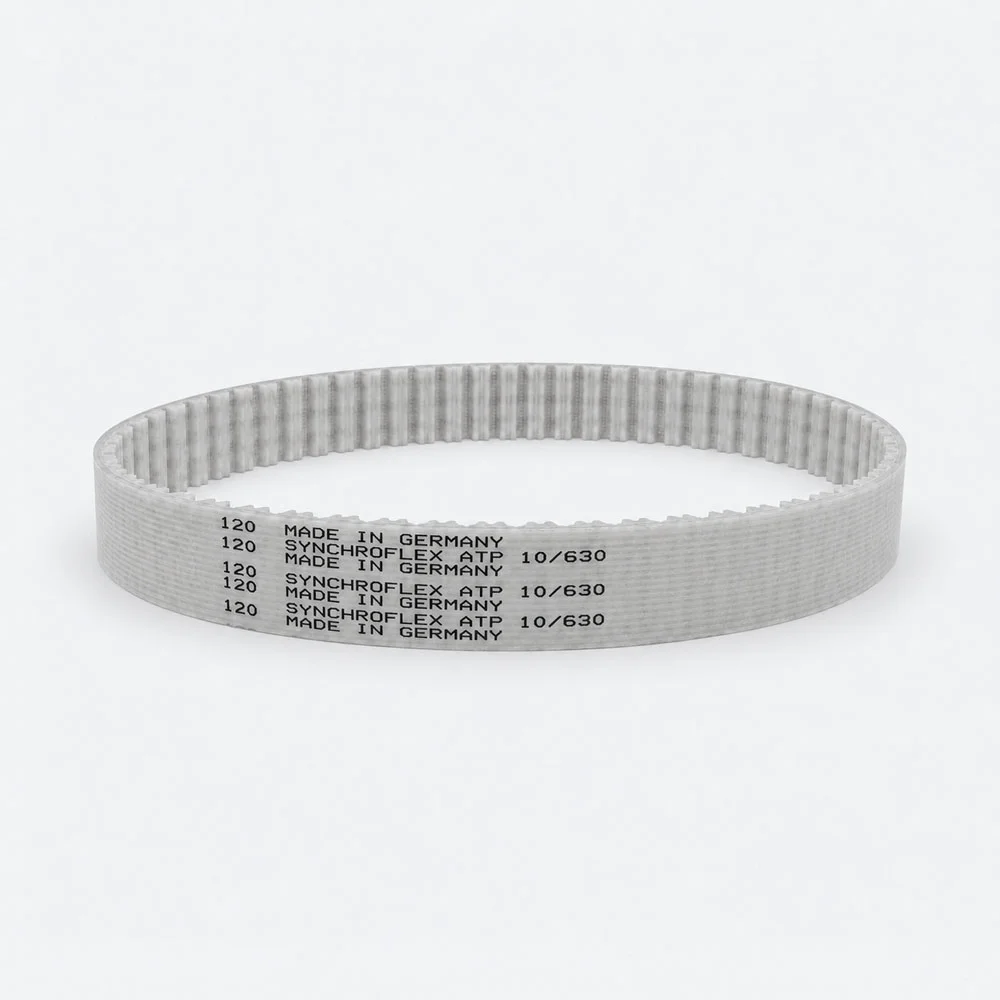
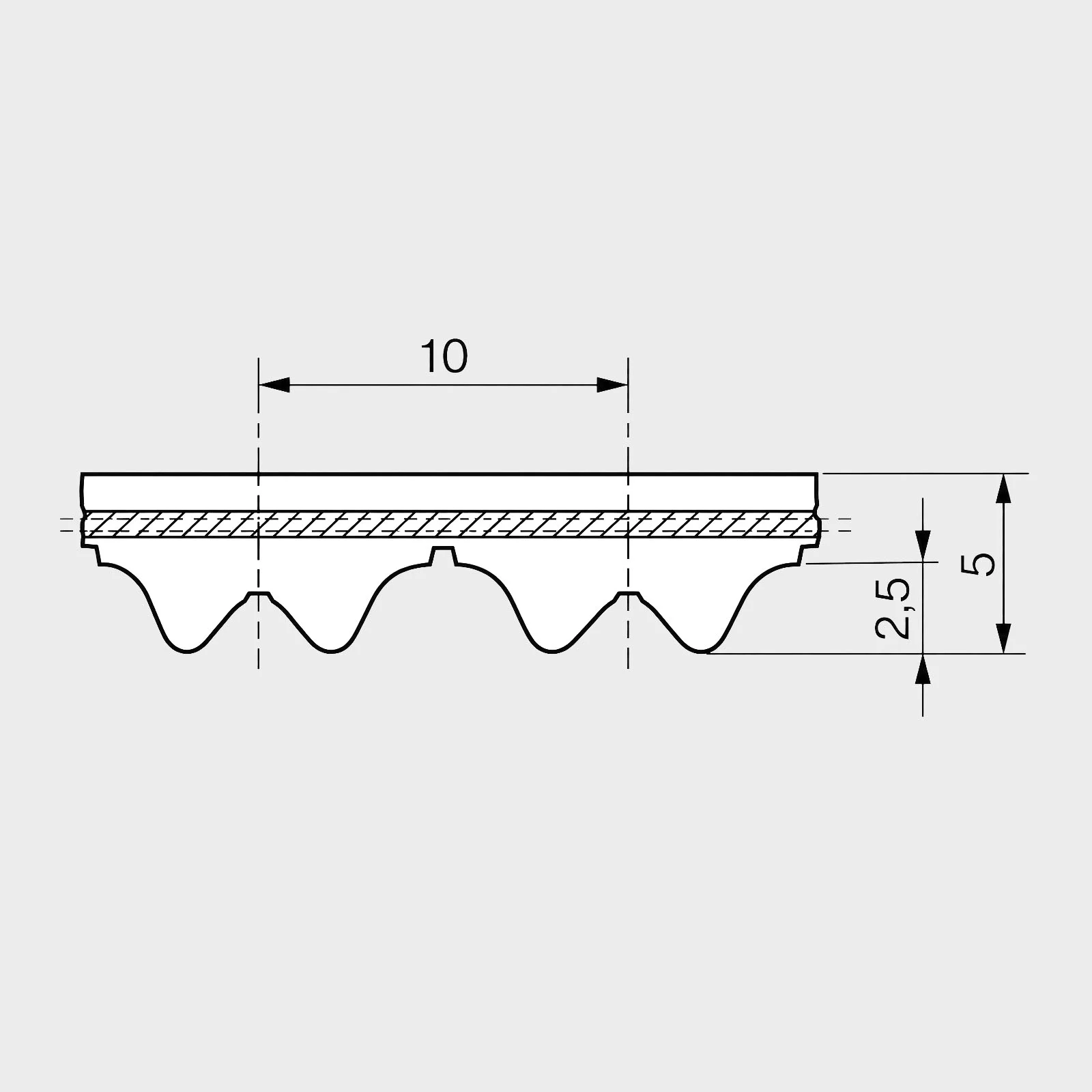



When a timing belt needs to be replaced correctly, the profile, pitch length and number of teeth are the first data that must be correct. The Conti Synchroflex ATP10 780 has an ATP10 profile, 10 mm tooth pitch, 780 mm pitch length and 78 teeth. This makes the product unique on the length and profile side, while the belt width is selected separately on the product side. The belt is manufactured as an endless Conti Synchroflex PU timing belt with steel cord. This is the standard version in the specified profile. It must not be confused with a possible GEN III version or a double-sided DL belt with the same pitch length.
These specifications can be used as a check against the marking on the old belt or against the machine's spare parts list. The pitch length is not necessarily the same as a measurement across the outside of the belt, and the number of teeth is therefore often the safest additional check. If in doubt, both the belt and timing belt pulleys should be examined before ordering a replacement.
ATP10 combines 10 mm metric pitch with a split tooth shape developed for higher loads and smoother engagement. The larger active tooth surface and the more even force distribution are key differences compared to classic trapezoidal profiles. When replacing, the ATP10 designation must therefore be confirmed on the belt, drawing or machine documentation. An AT10 pulley should not be assumed to be compatible without technical documentation.
With the cast manufacturing method, the finished belt becomes an exact copy of a precision-machined shape. This is a major reason for the uniform tooth pitch and reproducible length. The steel cord is integrated into the polyurethane and contributes to position and angular precision. The design is suitable for synchronous drives, where a conventional elastic friction belt does not provide the desired repeatability.
This item is a single-sided standard design. The teeth are located on the inside of the belt, while the back is smooth. It should not be confused with a double-sided DL version or the red GEN III series. If the machine is originally dimensioned for a specific variant, a change should only be made after a technical assessment of load, pulleys and preload.
The belt width is not written in the product name because the same pitch length is collected on one product page. The starting pu is 50 mm. Integer widths from 50 to 50 mm can be selected on this product page. The original supplier widths for this length are 50 mm. Other intermediate sizes are offered as cut-to-sizes of the same type of timing belt sleeve when they are within the selection shown. The number of teeth, pitch length and profile do not change when the width is changed.
Continental cites machine tools, grinding machines, textile machines and power transmissions with high demands on tooth load as examples for this profile family. The examples describe the profile's general area of application, but do not constitute an approval for any specific installation. The final belt width and pretension must be selected based on the transmitted torque, starting and shock loads, operating time, pulley sizes, speed and the number of teeth in simultaneous engagement. For safety-critical or heavily loaded drives, an actual calculation should be made.
When replacing a spare part, the marking on the existing belt should be compared with the product name. Check the profile designation, pitch length, number of teeth, design and width. If the text on the belt has worn away, the number of teeth can be counted and the pitch can be assessed by measuring over several teeth. A single external length measurement is less reliable because the nominal length of the timing belt is indicated in the pitch line.
The pulleys and belt should be considered as a single tooth engagement. Correct ATP10 geometry ensures that the load is distributed over the tooth flanks rather than concentrated on tooth tips or edges. The drive ratio is selected by the number of teeth on the pulleys, while the belt's 78 teeth and 780 mm pitch length determine the required combination of pulleys and center distance. When changing the drive, the geometry should be calculated.
The timing belt pulleys must be parallel and in the same plane. Even minor misalignments can cause the belt to move towards a flange and cause edge or cord damage. The belt should be installed without being twisted, sharply bent or pressed over a flange with a tool. The center distance is adjusted to achieve the calculated preload. Too high a tension increases the bearing and cord load, while too low a tension can cause tooth jumps at load peaks.
Troubleshooting should start with pu location of the damage. Edge wear is typically associated with grooveing and alignment, while tooth skipping can be associated with too low tension, load peaks or too few teeth in mesh. Ctiming bars on the back can be caused by too small rollers, back bending or environmental influences. Do not simply replace the belt without also finding the mechanical cause.
The standard material is specified for ambient temperatures from -30 °C to +80 °C. Applications close to the limits, especially below -10 °C or above +50 °C, may require special sizing. The service life is not only affected by the material, but also by load peaks, bending, pulley size, alignment and environment. Keep the drive clean and do not remove deposits with sharp tools that could damage the teeth. If the belt operates in chemically exposed areas, food environments, clean rooms or at extreme temperatures, a suitable special design should be considered.
Noise can be caused by incorrect pretension, skewed pulleys, poor tooth profile compatibility, excessive speed, resonance or worn tooth grooves. Lubrication is not the solution. First check alignment, tension, pulley condition and whether the belt runs without abnormal side contact.
This should be avoided. The belt should be installed by adjusting the center distance or following the correct installation procedure for the machine. Forcing it over a flange can damage the cord pullers, teeth or belt edge. After installation, the pulleys must be parallel and the pretension must be correct.
The belt has 78 teeth. The number of teeth is calculated by dividing the pitch length of 780 mm by the tooth pitch of 10 mm. The result is 78, and this number can be used as an additional check when identifying an existing belt. A different number of teeth means a different pitch length.
The Conti Synchroflex series is designed for precise and fast synchronous drives, but the permissible speed depends on the profile, pulley diameter, belt width, load and peripheral speed. A high speed must therefore not be approved based on the product name alone; the drive must be calculated.
No, not without documented compatibility. The 10 mm tooth pitch describes the distance between the teeth, but the shape and clearance of the tooth flanks may differ. The belt must be used with pulleys manufactured to the ATP10 profile. Visual similarity is not sufficient documentation.
No. A timing belt requires timing belt pulleys with the correct profile and pitch, while a V-belt works by friction in V-grooves. A conversion therefore requires new pulleys and a dimensioning of the entire transmission. The product is intended as a timing belt, not as a universal replacement.
Check that the belt runs centrally, that there is no abnormal heat or noise, and that the edges are not constantly rubbing against the flanges. Also look for signs of too low or too high pretension. If the drive requires a re-tension check, the machine manufacturer's procedure must be followed.
The product brings together the specified ATP10 profile and length on one side, so that the appropriate width can be selected without creating a separate item for each cut. The main technical data is 780 mm pitch length and 78 teeth. If in doubt about load or pulley compatibility, the drive should be calculated before ordering the belt.