New
DISCOUNTED
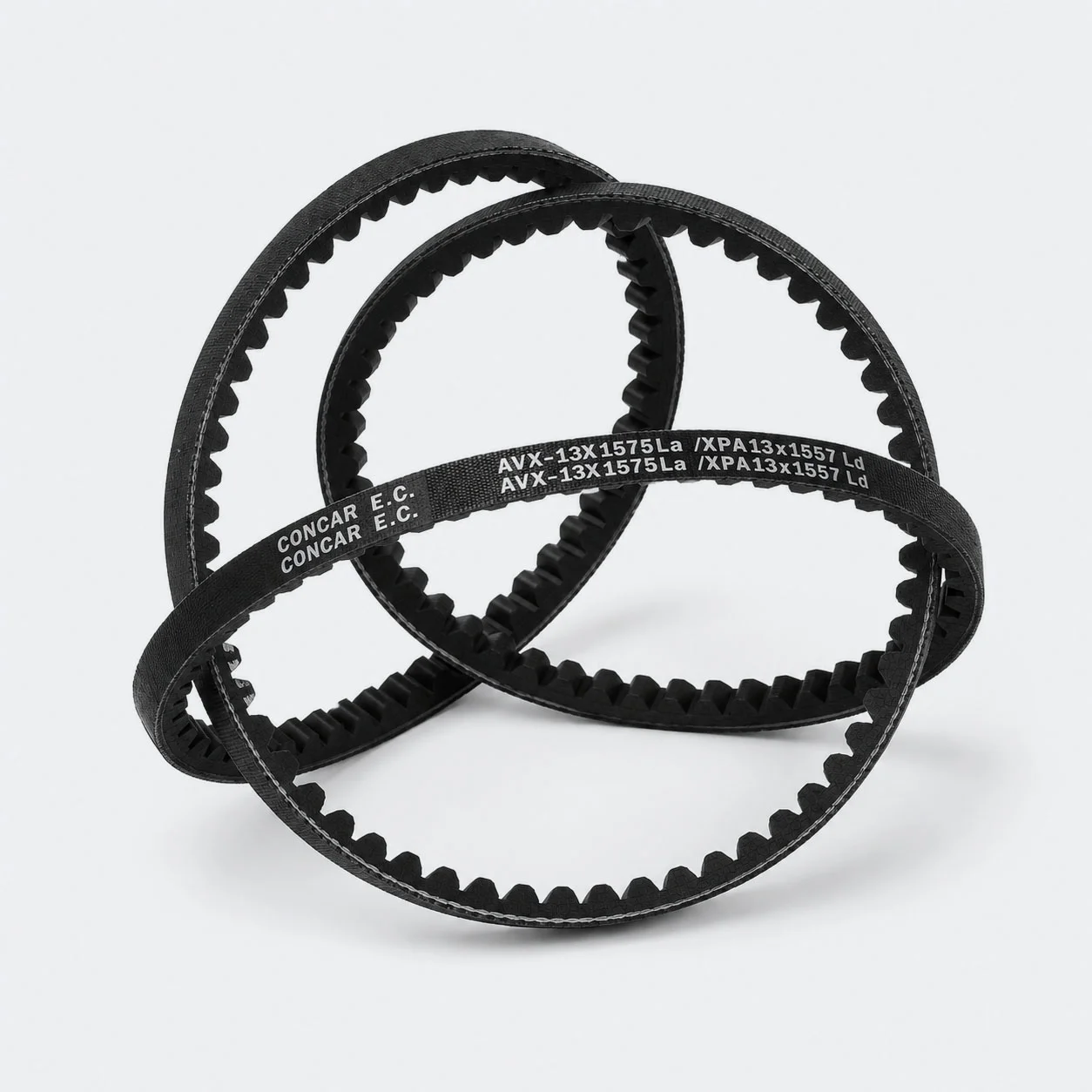
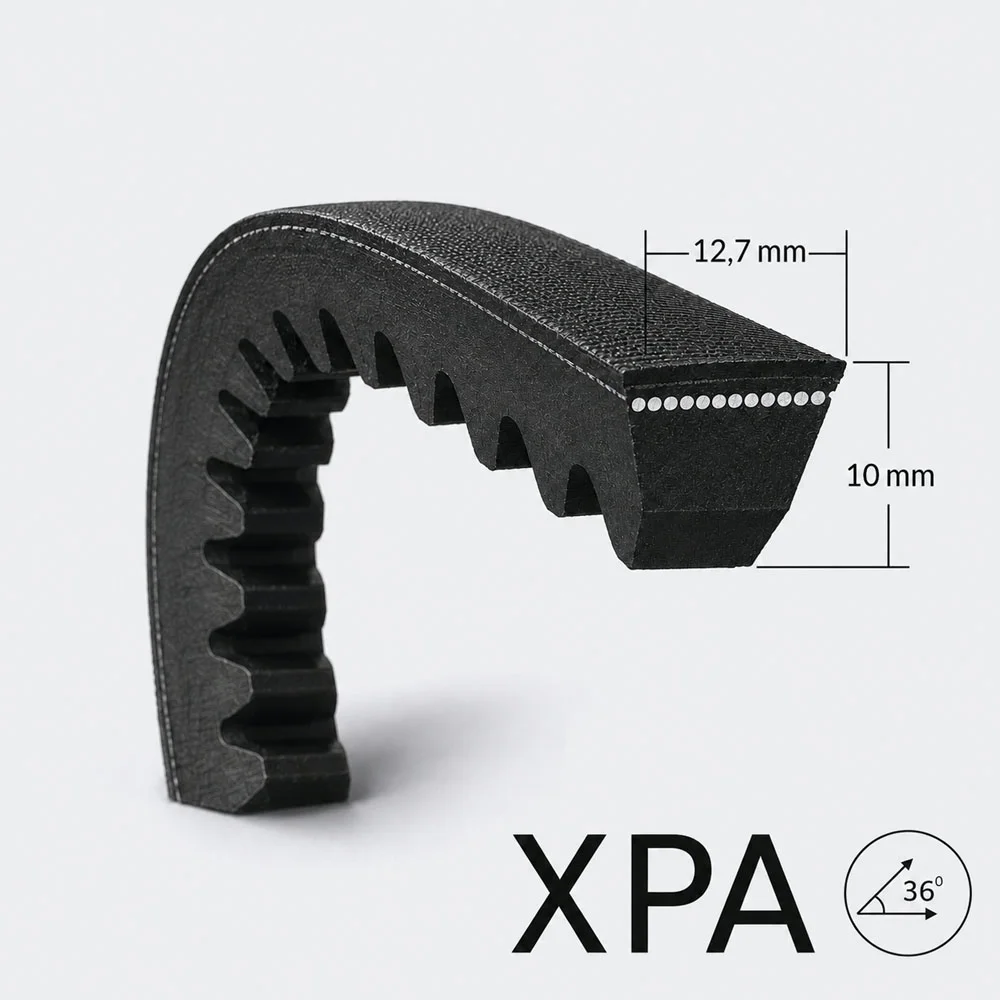

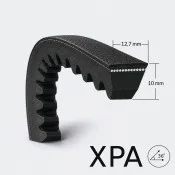


V-belt XPA / AVX 13 - 3150 Ld - 12.7 x 10 mm - ConCar is a ConCar timing narrow V-belt in profile XPA / AVX 13 with dimensions 12.7 x 10 mm. The V-belt is made of neoprene rubber with polyester reinforcement and is intended for V-belt drives, where the power is transferred via the sides of the belt in the V-groove of the pulley. The belt lengths are La 3168 mm, Ld 3150 mm and Li 3105 mm. It has Raw-Edge sides, which lie directly against the V-groove of the pulley, and a timing underside, which makes the belt more flexible around the pulleys.
Profile XPA / AVX 13 is built for V-groove pulleys, where the sides of the belt bear the contact against the pulley. With the dimensions 12.7 x 10 mm, the belt is a compact profile that must lie correctly in the groove to provide smooth power transmission.
The serrated underside does not function like the teeth on a timing belt. The belt therefore does not provide synchronous operation. The serration makes the belt more flexible around the pulleys and can help with heat dissipation, while the Raw-Edge sides are responsible for the contact with the V-groove.
The V-belt is made of neoprene rubber with polyester reinforcement. Neoprene rubber gives the belt flexibility, while polyester reinforcement helps the belt maintain its length during operation.
The raw-edge construction means that the sides of the belt lie directly against the V-grooves of the pulley. The serrated underside makes the belt easier to bend around the pulleys.
The belt is antistatic. This is a practical feature in belt drives, where static electricity can build up between the belt and pulley.
The belt complies with DIN 7753 / ISO 4184.
The lengths are La 3168 mm, Ld 3150 mm and Li 3105 mm. La is the external length, Ld is the effective length and Li is the internal length.
The three length measurements are used as a reference in various belt tables and machine data. Therefore, it is useful to have all measurements together with the profile and cross section.
The pulley groove must match the XPA / AVX 13 profile to ensure correct side contact of the belt. If the belt is too deep or too high in the groove, the contact may be poor and cause more heat or uneven belt movement.
On this type of belt, the raw-edge sides lie directly against the V-groove, while the timing underside helps the belt to bend. The 12.7 x 10 mm cross-section is therefore an important part of the product data.
A V-belt should run with proper tension and clean pulleys. Too low a tension can cause slippage and heat, while too high a tension puts unnecessary strain on the belt, bearings and shafts.
Wear often shows as shiny sides, ctiming bars, hard rubber, frayed edges or noise under load. If there are several belts in the same pull, the belts should have the same profile and length so that they work equally.
The timing underside makes the belt more flexible when bending. This does not change the function of the belt as a V-belt; the force is still transmitted via the sides to the pulley.
The profile describes the wedge shape and cross-section of the belt. For this belt, the measurement is 12.7 x 10 mm, and it determines how the belt fits in the V-groove of the pulley.
La 3168 mm, Ld 3150 mm and Li 3105 mm are measured from different locations on the belt. They are used because belt series and machine data do not always use the same reference pu .
The polyester reinforcement helps the belt maintain its length, while the neoprene rubber provides flexibility and contact against the pulley.
The timing underside makes the belt more flexible around the pulleys. It does not function like a timing belt and does not provide synchronous operation.
The force is transmitted via the sides of the belt to the V-grooves of the pulley. The teeth on the underside are not for tooth engagement.