DISCOUNTED


V-belt XPB 1600 - 17x14 MM - PIX X'tra ® is a rough-edged and timing narrow V-belt in XPB profile for mechanical power transmission in V-belt drives. The belt is specified with profile XPB, goal 17x14MM, Ld 1600mm, Li 1540mm and La 1628mm.
XPB is a stronger timing narrow V-belt, which is often used when more power needs to be transmitted than in the smaller XPZ and XPA profiles. The belt is particularly relevant for more powerful belt drives, where the motor, pu , fan, compressor or process machine requires a wider contact surface. The correct cross-section is essential for the sides of the belt to grip the pulley properly and can transmit the torque without unnecessary slip.
The Ld dimension is the effective length and the length specification typically used for narrow V-belts. Li describes the inner length, while La describes the outer length. The three dimensions must be understood together with the profile, cross-section and pulley grooves, because the length designation alone does not describe the full geometry of the belt.
The three length specifications describe the belt's geometry from each measurement position. L 1540 mm describes the inner length, Width 1600 mm is the effective length, and Width 1628 mm is the outer length. The difference between them is due to the geometry of the belt and the measurement method. Therefore, belts with almost the same outer dimensions can still have different technical specifications.
With Ld 1600 mm, the belt is a longer variant, where alignment and uniform tension are more important. The longer the center distance and the greater the belt pull, the more important it is that the belt does not work crookedly between the pulleys.
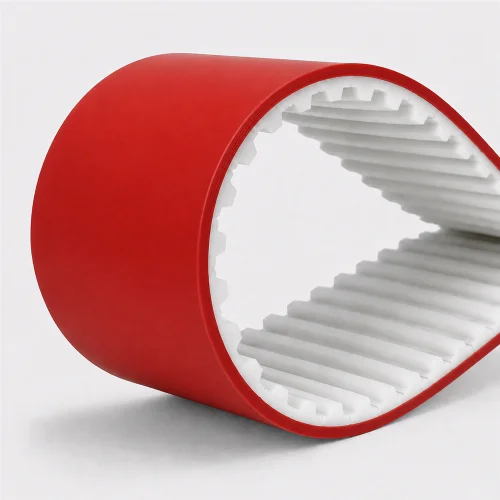
The raw edge construction means that the sides of the belt are designed for direct contact with the pulley. The serrated underside makes the belt more compliant around pulleys, especially where the diameter is limited. PIX also specifies polyester cord as a tensile member, which is relevant for longitudinal stability and load capacity in a correctly dimensioned belt drive.
PIX states for the X'tra® series a power transmission capacity of 15–20% over wrapped belts in comparable operating conditions. The data sheet also highlights better flexibility, approximately 20% higher heat dissipation than wrapped belts, possibility of smaller pulleys in compact drives, maximum linear belt speed up to 42 m/s, antistatic design, oil and heat resistance, REACH/RoHS compliance and temperature range from -45°C to +120°C.
For the XPB profile, the PIX data sheet states the length range 550–8380 mm. This belt with Ld 1600 mm is in the range 550–3000 mm, where the data sheet states a length tolerance of ±6 mm and a set tolerance of 2 mm. The tolerances are relevant when replacing, especially if several belts are to run in parallel or if the center distance can only be adjusted to a limited extent.
This XPB belt is relevant in medium and heavier applications where an XPZ or XPA profile does not provide sufficient bearing surface for the current belt drive. In operation, the pulley groove, the belt cross-section and the timing construction are important for the contact between the belt and pulley. Profile and length must match, as the correct length does not compensate for an incorrect cross-section.
The operating situation has a great impact on the belt's lifespan: is the belt running constantly, are there many starts/stops, is the load even, and are the pulleys clean and in good condition? This XPB belt is designed for mechanical power transmission, but lifespan and operation still depend on alignment, tension, temperature, pulley quality, and whether the belt is installed without damage.
XPB belongs to the same narrow profile family as SPB, but the belt has its own technical specification with a timing, raw-edge construction. The belt works with side contact in the pulley groove, and the correct groove profile is necessary for the contact surface, friction and load to be distributed correctly. Incorrect cross-section or skewed pulleys can cause overheating, noise, slippage and uneven wear.
The technical identification consists of the combination XPB, 17x14MM, Width 1600 mm, L 1540 mm, Width 1628 mm and PIX X'tra®The combination distinguishes the item from nearby V-belts with other profiles, other length standards or a different construction.
When installing, the belt should be placed without being twisted or forced over the pulley with a screwdriver or other sharp tool. Instead, adjust the center distance or loosen the relevant tensioning device so that the belt can be installed without damage. After installation, the belt should have the tension that the machine is designed for, because both too loose and too tight a belt can cause problems.
A new belt should be installed in clean, dry and undamaged pulleys. Oil, old belt dust, rust or sharp edges can shorten the life. Alignment between the pulleys is also important. Even a good belt can quickly wear out if the pulleys are misaligned or if the belt is forced to work sideways.
Avoid using belt spray as a permanent solution to slippage. Slippage is often caused by incorrect tension, worn pulleys, oil contamination or incorrect belt specification. A properly specified XPB belt of the correct length and in a clean, aligned belt drive is a more durable solution than temporary remedies.
The PIX X'tra® series was developed as moulded raw edge cogged belts and this XPB belt follows the same principle with raw side faces and timing underside. The design combines flexibility around the pulleys with a tensile member that helps the belt maintain its length under load. When installed correctly it supports a more stable power transmission, especially in belt drives where heat, vibration or repeated load changes can otherwise affect the life.
XPB is the profile designation and 1600 refers to the effective length Ld in millimeters. For this item, this means that the belt is specified as XPB profile with dimensions 17x14 MM, Li 1540 mm, Ld 1600 mm and La 1628 mm.
No. The PIX X'tra® in this series is a moulded raw edge cogged belt. It differs from classic wrapped belts in construction, flexibility and working surface.
The belt should be replaced if there are ctiming bars, obvious side surface wear, frayed edges, glazing, squealing, vibrations or repeated retensioning. The pulleys should also be in good condition, as a new belt will wear quickly in damaged grooves.
Yes, in parallel belt drives it is usually best to replace the entire set. Mixing belts of different ages or levels of wear can cause the load to be unevenly distributed, causing one belt to work harder than the others.
PIX lists the series as heat and oil resistant, but this does not mean that the belt should run in constant oil contamination or without control of the operating environment. Cleaning, shielding and correct sizing are still important.
Antistatic design means that the belt is designed to reduce static charge under suitable conditions. In specific environments, the final suitability depends on the requirements of the entire plant and relevant approvals.
Belt operation depends on the profile, length, tension and pulley groove matching. Worn or damaged grooves can shorten belt life, while correct alignment and a clean contact surface provide more stable power transmission.
For operational reliability, it is also important to look at the entire belt drive. A V-belt only works optimally when the pulleys have the correct groove profile, when the shafts are parallel, and when the belt is neither overloaded nor runs with too little tension. This applies to both single belts and sets of multiple parallel belts.
Short conclusion: V-belt XPB 1600 - 17x14 MM - PIX X'tra ® is an XPB V-belt from PIX X'tra® with dimensions 17x14 MM, Ld 1600 mm, Li 1540 mm and La 1628 mm. It is a relevant belt type when the belt drive requires this particular profile and a rough-edged, timing construction with the technical properties that PIX specifies for the X'tra® series.