New
DISCOUNTED


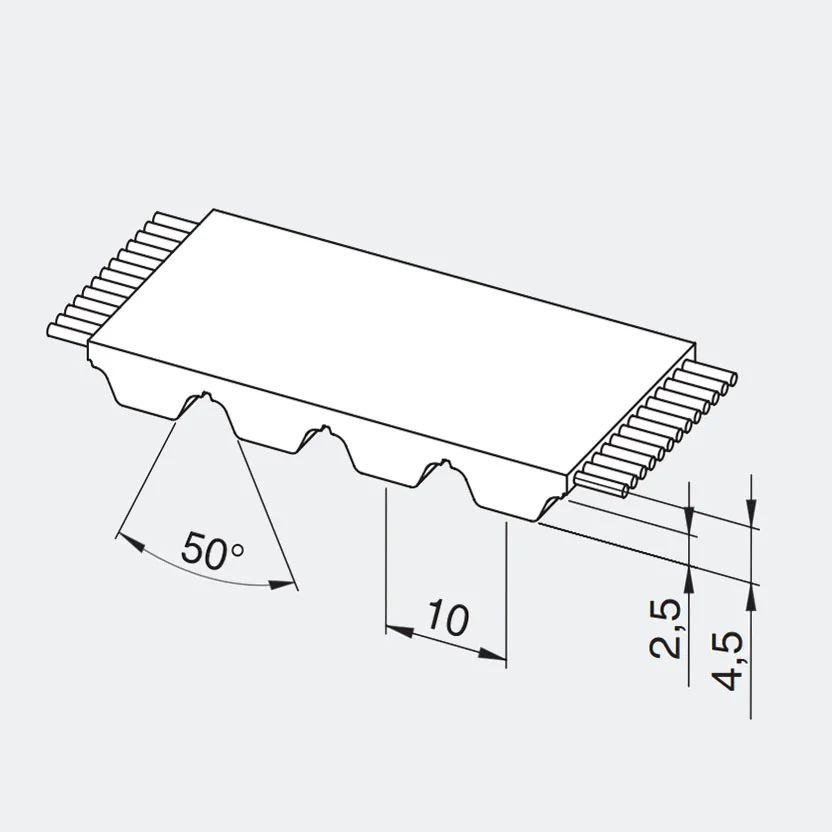




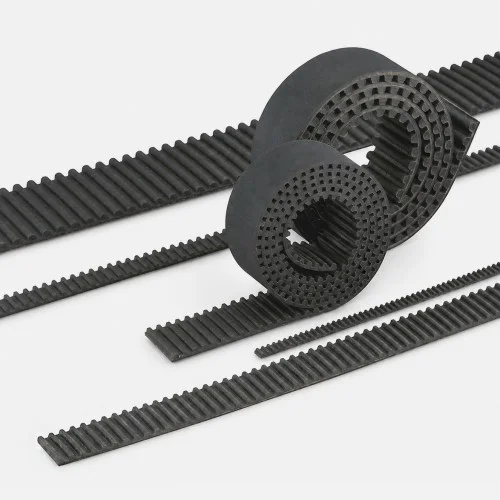
The Conti Synchroflex AT10 GEN III 960 combines a precise AT10 GEN III tooth geometry with a molded polyurethane body and longitudinally stable steel cord tension elements. The product has 96 teeth and a pitch length of 960 mm, which corresponds to a tooth pitch of 10 mm. The belt is used in synchronous drives where uniform movement and reproducible position are more important than the elasticity normally associated with a conventional V-belt or flat belt. The GEN III version is the reinforced high-performance construction with red high-performance polyurethane and a denser, two-filament steel cord. It should therefore be treated as a separate product series and not as the usual standard version.
The list gathers the information normally used to identify a timing belt: nominal length, number of teeth, profile, material and make. It is important to read all the information together. Two belts can have the same pitch length but be incompatible if the tooth profile or tooth pitch is different. Conversely, a different width does not change the number of teeth as long as the profile and pitch length are the same.
The AT profile has been further developed from the classic T profile. The larger tooth volume provides a higher tooth shear strength, and the profile is designed for a favorable tooth engagement with reduced engagement shocks. This makes the AT series suitable when a drive must be compact and at the same time transmit motion precisely. Continental states that the AT profile can perform up to 50% more than a corresponding T profile, but the actual capacity always depends on width, discs, speed and load profile.
The endless PU construction combines low dead weight with high longitudinal rigidity. The steel cord tension elements are cast into the belt and are not intended to be exposed, damaged or sharply broken during installation. The wear resistance of the polyurethane and the strong bond to the cord are central to the belt's lifespan. Correct handling is therefore just as important as the correct choice of profile and length.
In the GEN III series, both the polyurethane and the tension body are optimized for higher performance. The tighter cord packing can increase the permissible tensile load, and the balanced two-filament construction is designed to reduce flange friction and improve belt running. Continental states that existing standard AT or ATP pulleys can be used with the corresponding GEN III profile. However, the remaining dimensioning of the drive still needs to be checked.
The application examples in the catalogue include construction machinery, pu , paper machines, compressors, compactors, textile machines and roller conveyor drives. This shows that the profile can be used in both power transmission and motion control. However, the specific belt must only be finally selected when the machine's torque, speed, center distance and pulley geometry are known. When simply replacing spare parts, the safest method is usually to copy the documented profile, length, design and width.
This product line has been created with 16 mm as the base width because this is the width of the selected item and thus the SKU used for inventory control. Integer widths from 16 to 50 mm can be selected on this product page. The widths that appear as standard widths in the supplier data are marked separately in the options. The price surcharge is calculated as a percentage of the base width: doubling the width results in a surcharge of 100%. The technically necessary width should be selected according to the load and not only according to the price.
A belt of the correct length can still function poorly if the pulleys have the wrong profile, are worn or are misaligned. Therefore, check the tooth grooves, flanges, shaft alignment and the number of teeth on the pulleys. For AT10 GEN III, the nominal tooth pitch is 10 mm. The fixed tooth mesh makes the gear ratio reproducible, but only when the belt has sufficient wrap and does not run with constant side pressure.
The timing belt pulleys must be parallel and in the same plane. Even minor misalignments can cause the belt to move towards a flange and cause edge or cord damage. The belt should be installed without being twisted, sharply bent or pressed over a flange with a tool. The center distance is adjusted to achieve the calculated preload. Too high a tension increases the bearing and cord load, while too low a tension can cause tooth jumps at load peaks.
It is not enough to compare the total circumference of a belt. The correct replacement must have the same pitch, tooth profile and number of teeth as the existing drive. The width must match the pulleys and the required capacity, and a DL or GEN III version must be identified separately. If in doubt, pictures of the marking, tooth profile and pulleys can be used as a supplement, but a documented spare part designation is best.
A properly running timing belt should move smoothly without continuous contact against one flange. Regularly check the teeth for deformation, the back for ctiming bars and the edges for frayed areas. Abnormal noise or heat can be an early sign of incorrect tension or pulley failure. A systematic check of pulleys and belt is more effective than trying to hide symptoms with lubricant.
Continental specifies a temperature range of up to +100 °C for the GEN III series. When operating close to the temperature limits, the drive must still be dimensioned according to the specific load and environmental conditions. The timing belt operates without lubrication, and oil or grease should therefore not be added to dampen noise. The polyurethane is described as resistant to aging as well as simple oils, grease and petrol and to certain acids and bases. In the case of permanent contact, cleaning chemicals or unknown media, material compatibility should be specifically clarified.
No. The Conti Synchroflex series is manufactured as cast, endless timing belts. The belt therefore does not have a welded joint around the circumference. The cast process provides a uniform tooth pitch around the entire belt and a strong bond between the polyurethane and the cast steel cord tension elements.
The pitch length is the nominal length measured in the belt cord line where the steel cord tension members are located. It is not the same as a random outside circumference measurement. For this belt, a pitch length of 960 mm corresponds to 96 teeth with a 10 mm pitch.
The belt has 96 teeth. The number of teeth is calculated by dividing the pitch length of 960 mm by the tooth pitch of 10 mm. The result is 96, and this number can be used as an additional check when identifying an existing belt. A different number of teeth means a different pitch length.
GEN III has a different material construction and capacity data than the standard belt. The higher cord density, two-filament construction and high-performance polyurethane make it a separate product line, even though the pitch length and tooth profile may be identical.
Check that the belt runs centrally, that there is no abnormal heat or noise, and that the edges are not constantly rubbing against the flanges. Also look for signs of too low or too high pretension. If the drive requires a re-tension check, the machine manufacturer's procedure must be followed.
No. The timing belt is designed for lubrication-free operation. Oil or grease should not be added to reduce noise as this may mask an alignment, pretension or worn pulley problem. Instead, keep the tooth mesh clean and check the cause of any abnormal noise.
Correct pretension keeps the teeth in stable engagement and reduces the risk of tooth jump. Too low a tension can cause impact and jump under load, while too high a tension increases the load on the cord, pulleys and bearings. The correct value must be determined based on the drive's dimensioning.
The product brings together the specified AT10 GEN III profile and length on one side, so that the appropriate width can be selected without creating a separate item for each cut. The main technical data is 960 mm pitch length and 96 teeth. In case of doubt about load or pulley compatibility, the drive should be calculated before ordering the belt.