Sold out
DISCOUNTED
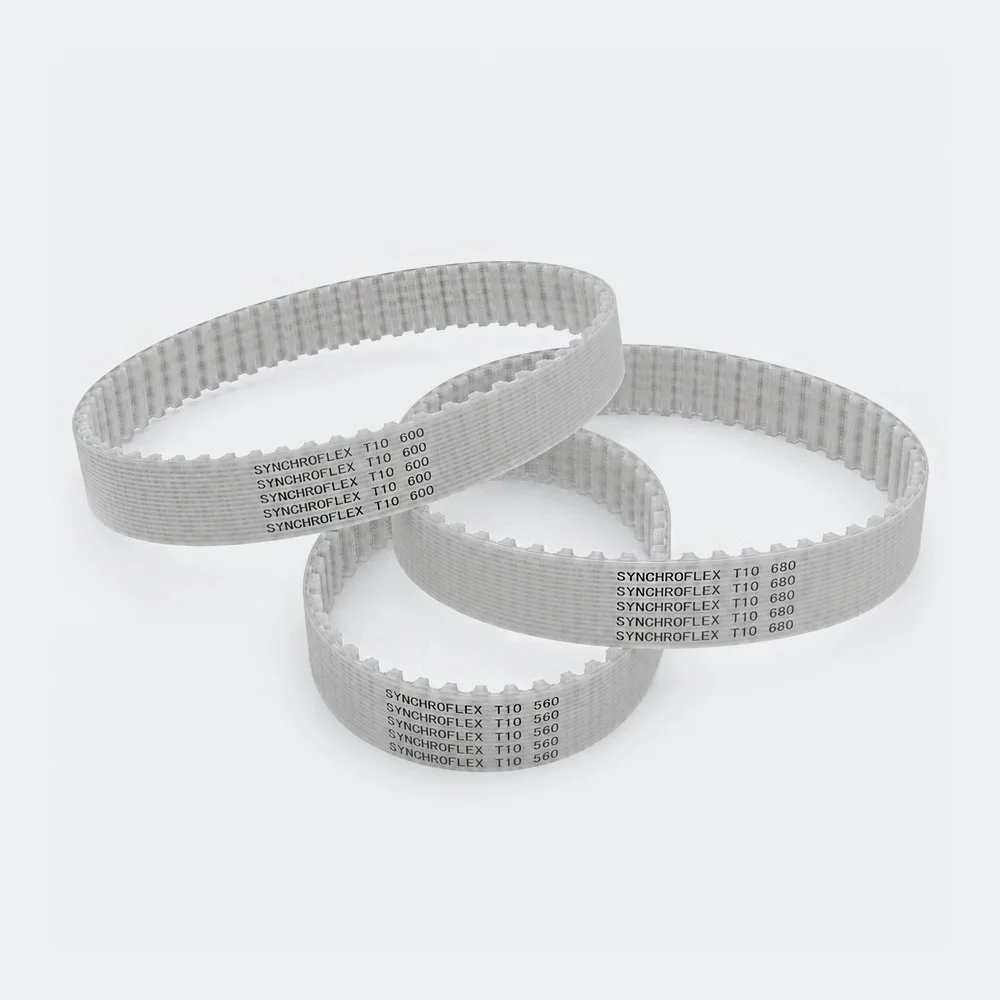


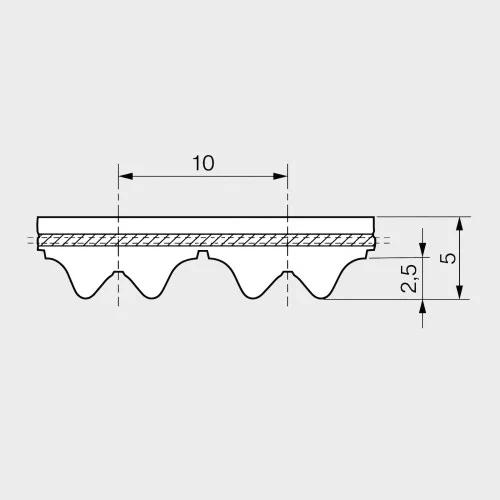
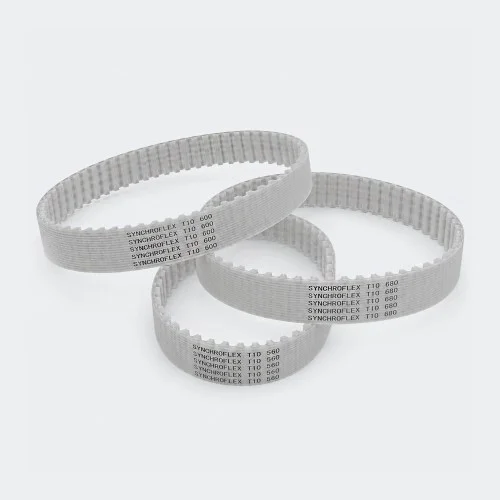
The Conti Synchroflex T10 1420 combines a precise T10 tooth geometry with a molded polyurethane body and longitudinally stable steel cord tension elements. The product has 142 teeth and a pitch length of 1420 mm, which corresponds to a tooth pitch of 10 mm. The belt is used in synchronous drives where uniform movement and reproducible position are more important than the elasticity normally associated with a conventional V-belt or flat belt. This is the standard version in the specified profile. It should not be confused with a possible GEN III version or a double-sided DL belt with the same pitch length.
The list gathers the information normally used to identify a timing belt: nominal length, number of teeth, profile, material and make. It is important to read all the information together. Two belts can have the same pitch length but be incompatible if the tooth profile or tooth pitch is different. Conversely, a different width does not change the number of teeth as long as the profile and pitch length are the same.
The trapezoidal T-geometry is a standardized solution for synchronous transmission. The teeth mesh with corresponding grooves in the timing belt pulley, so that the speed ratio is maintained without slipping. The correct pitch is crucial: a T5 belt, for example, will not fit in an AT5 pulley simply because the tooth pitch is 5 mm in both places. The shape and clearance of the tooth flanks are different.
The belt body consists of wear-resistant polyurethane, which encloses high-strength steel cord. The materials each have their own function: PU forms the teeth and protects the belt against mechanical wear, while the cord tensioning elements provide high longitudinal stiffness and limit post-elongation. Continental describes the design as maintenance-friendly and lubrication-free. This does not mean that the drive can be ignored; pulleys, alignment and pretension should still be checked.
The standard version is selected when the supplier's article data does not specify GEN III or DL. This is an important product distinction, because different versions can share both profile and length. Therefore, on this product page, it is the standard version that is described. The belt width can be selected, but the basic construction and tooth geometry are not changed.
The application examples in the catalogue include machine tools, main and auxiliary drives, textile machines and printing machines. This shows that the profile can be used in both power transmission and motion control. However, the specific belt must only be finally selected when the machine's torque, speed, center distance and pulley geometry are known. When simply replacing a spare part, the safest method is usually to copy the documented profile, length, design and width.
A belt of the correct length can still function poorly if the pulleys have the wrong profile, are worn or are misaligned. Therefore, check the tooth grooves, flanges, shaft alignment and the number of teeth on the pulleys. For T10, the nominal tooth pitch is 10 mm. The fixed tooth mesh makes the gear ratio reproducible, but only when the belt has sufficient wrap and does not run with constant side pressure.
When installing, the cord pullers must be protected against kinks and local pressure damage. The belt must not be pinched with pliers or a screwdriver, and it should not be folded sharply. Check that the pulleys have the same pitch and profile as the belt and that they are not worn out. A stable drive is achieved through the right combination of alignment, wrapping and calculated pretension.
The basic price applies to 6 mm, and the other widths are calculated with the same percentage logic as the existing PU timing belts in the webshop. Integer widths from 6 to 50 mm can be selected on this product page. A width of twice the basic width therefore costs 100% more, while a width of one and a half times the basic width gives approximately 50% extra. This price rule is a webshop calculation; it does not replace a technical dimensioning of the belt's load-bearing capacity.
Uniform light polishing of the tooth flanks may be normal, but localised spalling, ctiming baring or severe wear should be investigated. Wear on one edge often indicates misalignment or persistent flange contact. Damage to tooth tips may be due to incorrect profile, foreign bodies or inadequate engagement. If cord becomes visible or the belt has a sharp break, it should not continue in service without assessment.
The standard material is specified for ambient temperatures from -30 °C to +80 °C. Applications close to the limits, especially below -10 °C or above +50 °C, may require special sizing. The molded PU belt is maintenance-friendly and does not require lubricant. Regular visual inspection is still relevant: look for ctiming bars, frayed edges, shiny tooth flanks, foreign body impressions and abnormal side contact. Sudden changes in noise or grooveing may indicate misalignment, too low tension or worn pulleys.
It is not enough to compare the total circumference of a belt. The correct replacement must have the same pitch, tooth profile and number of teeth as the existing drive. The width must match the pulleys and the required capacity, and a DL or GEN III version must be identified separately. If in doubt, pictures of the marking, tooth profile and pulleys can be used as a supplement, but a documented spare part designation is best.
Check that the belt runs centrally, that there is no abnormal heat or noise, and that the edges are not constantly rubbing against the flanges. Also look for signs of too low or too high pretension. If the drive requires a re-tension check, the machine manufacturer's procedure must be followed.
The standard version is single-sided with teeth on the inside and a smooth back. It must run with the teeth in the corresponding tooth grooves; the back is not an alternative tooth side.
The tooth engagement provides a positive, synchronous transmission without the normal slippage of a friction belt. This makes the profile relevant for positioning tasks, but the achievable accuracy also depends on the quality of the pulleys, shaft play, belt pretension, load and the overall machine design.
The tooth pitch is the distance from one tooth to the next and is 10 mm for this profile. The pitch length is the entire nominal circumference in the cord line and is 1420 mm. When the pitch length is divided by the tooth pitch, the belt has 142 teeth.
The standard PU is described as resistant to simple oils, grease and petrol as well as certain acids and bases. This does not mean universal chemical resistance. In the case of continuous contact, high concentrations or cleaning agents, the specific liquid, temperature and exposure time should be assessed.
No. This is a cast endless timing belt with a fixed pitch length. It can be cut to width within the available options, but the circumference and number of teeth cannot be changed. If the length needs to be changed, a different cast belt size is required.
Count the teeth and check the pitch. 142 teeth times 10 mm gives 1420 mm pitch length. Then compare the profile and design with the marking or the machine's spare parts list. A measurement around the outside of the belt alone is not accurate enough.
The pitch length is the nominal length measured in the belt cord line where the steel cord tension elements are located. It is not the same as a random outer circumference measurement. For this belt, 1420 mm pitch length corresponds to 142 teeth with 10 mm tooth pitch.
Conti Synchroflex T10 1420 is the correct size when the drive requires T10, 1420 mm pitch length and 142 teeth. The belt is cast endless in PU with steel cord and must be used with timing belt pulleys that match the profile. Choose the width according to the technical load and always check the design, alignment and pretension before commissioning.