Sold out
DISCOUNTED
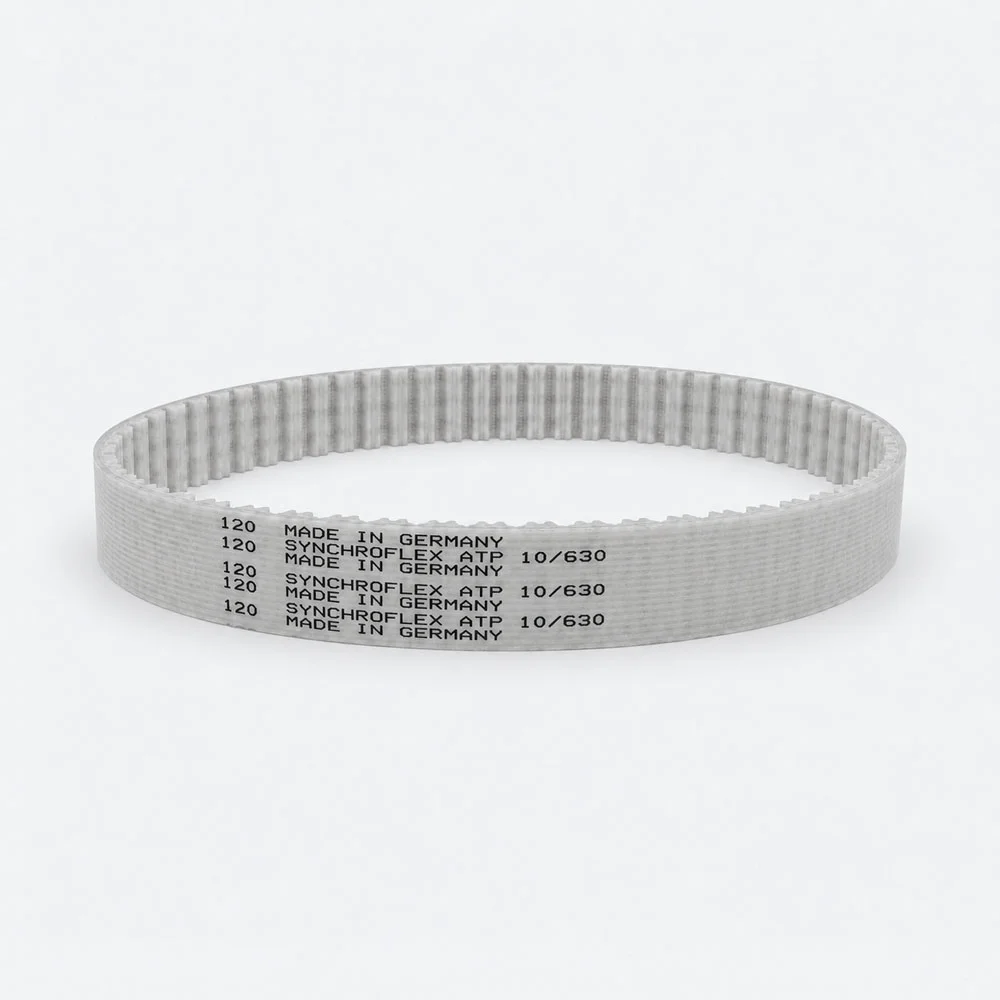

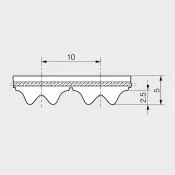


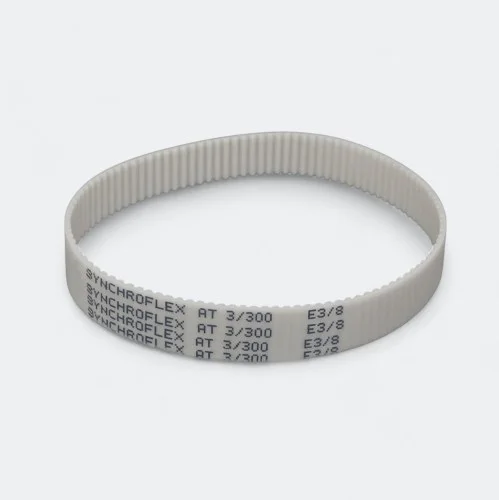
This ATP10 timing belt is specified with a pitch length of 1800 mm and 180 teeth. The ratio between length and number of teeth is fixed: 1800 mm divided by 10 mm gives exactly 180 teeth. The Conti Synchroflex ATP10 1800 is supplied as a cast, endless PU belt, so there is no weld joint in the finished ring. The design is developed for synchronous operation and precise machine movements. This is the standard version in the specified profile. It should not be confused with a possible GEN III version or a double-sided DL belt with the same pitch length.
The list gathers the information normally used to identify a timing belt: nominal length, number of teeth, profile, material and make. It is important to read all the information together. Two belts can have the same pitch length but be incompatible if the tooth profile or tooth pitch is different. Conversely, a different width does not change the number of teeth as long as the profile and pitch length are the same.
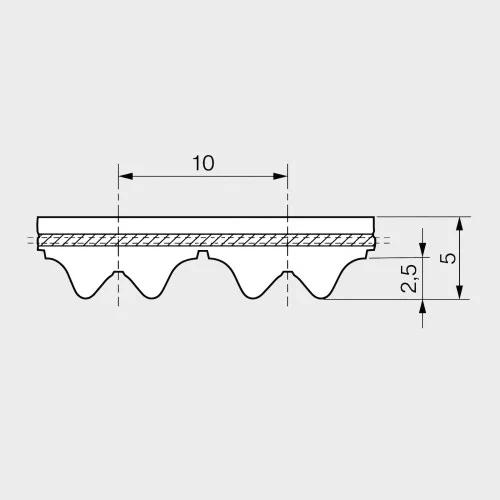
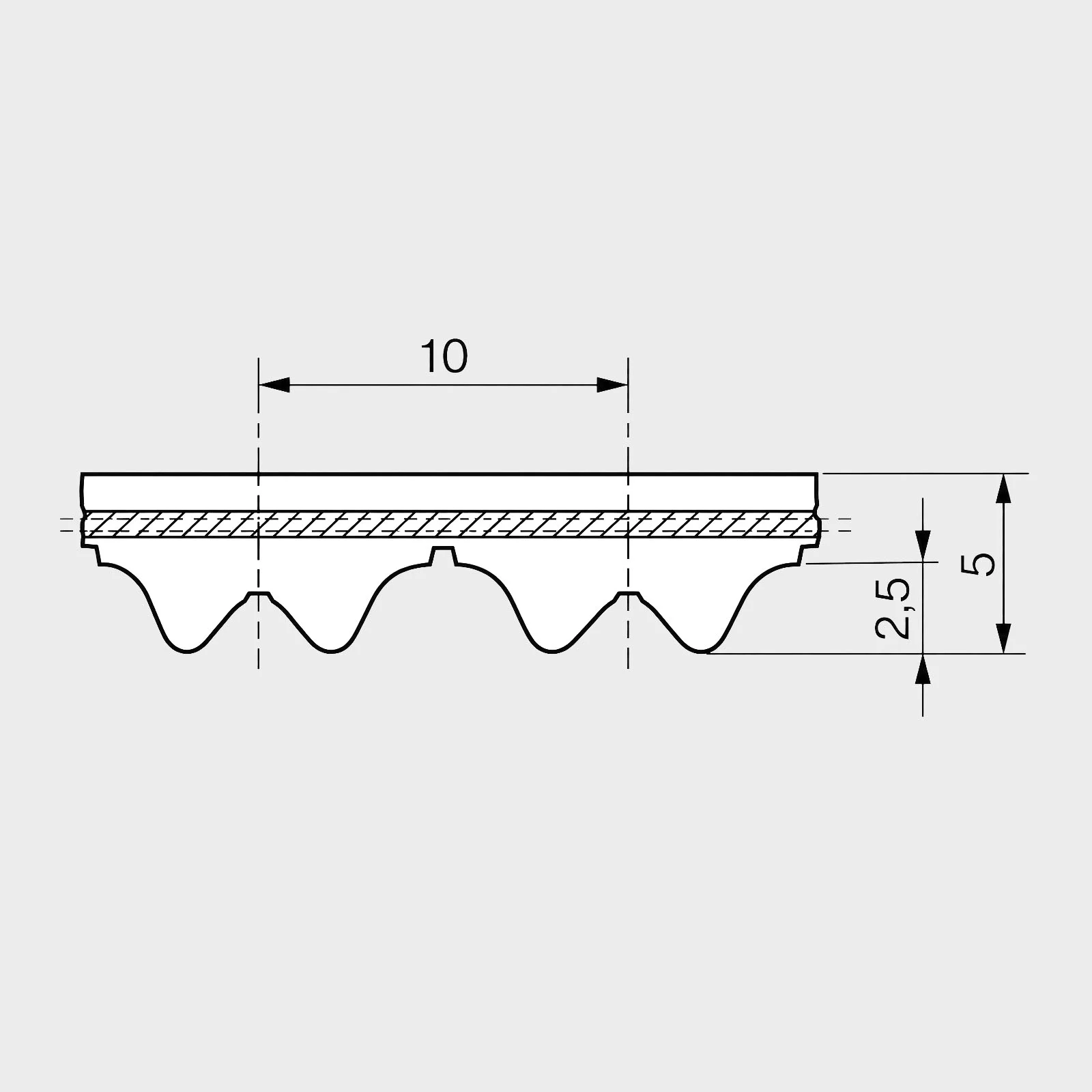
ATP10 combines 10 mm metric pitch with a split tooth shape developed for higher loads and smoother engagement. The larger active tooth surface and the more even force distribution are key differences compared to classic trapezoidal profiles. When replacing, the ATP10 designation must therefore be confirmed on the belt, drawing or machine documentation. An AT10 pulley should not be assumed to be compatible without technical documentation.
Conti Synchroflex is manufactured by casting, where the polyurethane is precisely shaped to the tool's tooth geometry around the embedded steel cord tension elements. The casting process provides high pitch accuracy over the entire circumference of the belt and a strong connection between PU and cord. The finished timing belt is endless and therefore has no welded joints. The polyurethane provides a wear-resistant tooth and back surface, while the steel cord takes the longitudinal tensile load.
The product is the regular Conti Synchroflex standard version in the specified profile. Standard and GEN III may have the same pitch length and number of teeth, but they are different product series with different material construction and capacity data. The same applies to a DL belt, which has teeth on both sides. When reordering, the entire profile designation should therefore be checked, not just the length.
Continental cites machine tools, grinding machines, textile machines and power transmissions with high demands on tooth load as examples for this profile family. The examples describe the profile's general area of application, but do not constitute an approval for any specific installation. The final belt width and pretension must be selected based on the transmitted torque, starting and shock loads, operating time, pulley sizes, speed and the number of teeth in simultaneous engagement. For safety-critical or heavily loaded drives, an actual calculation should be made.
The pulleys and belt should be considered as a single tooth engagement. Correct ATP10 geometry ensures that the load is distributed over the tooth flanks rather than concentrated on tooth tips or edges. The drive ratio is selected by the number of teeth on the pulleys, while the belt's 180 teeth and 1800 mm pitch length determine the required combination of pulleys and center distance. When changing the drive, the geometry should be calculated.
The belt must be able to be placed on the pulleys without force. If it can only be mounted by forcing it over a flange, the center distance or mounting procedure is incorrect. The pulley shafts must be aligned and the flanges must be smooth and undamaged. In the case of multi-shaft or counter-bent drives, the diameter and position of the rollers must be assessed separately. Correct pretensioning reduces the risk of tooth skipping without unnecessarily loading the bearings.
The belt width is not written in the product name because the same pitch length is collected on one product page. The starting pu is 20 mm. Integer widths from 20 to 50 mm can be selected on this product page. The original supplier widths for this length are 20, 32 and 50 mm. Other intermediate sizes are offered as cut-to-sizes of the same type of timing belt sleeve when they are within the selection shown. The number of teeth, pitch length and profile do not change when the width is changed.
A properly running timing belt should move smoothly without continuous contact against one flange. Regularly check the teeth for deformation, the back for ctiming bars and the edges for frayed areas. Abnormal noise or heat can be an early sign of incorrect tension or pulley failure. A systematic check of pulleys and belt is more effective than trying to hide symptoms with lubricant.
The standard material is specified for ambient temperatures from -30 °C to +80 °C. Applications close to the limits, especially below -10 °C or above +50 °C, may require special sizing. The molded PU belt is maintenance-friendly and does not require lubricant. Regular visual inspection is still relevant: look for ctiming bars, frayed edges, shiny tooth flanks, foreign body impressions and abnormal side contact. Sudden changes in noise or grooveing may indicate misalignment, too low tension or worn pulleys.
When replacing a spare part, the marking on the existing belt should be compared with the product name. Check the profile designation, pitch length, number of teeth, design and width. If the text on the belt has worn away, the number of teeth can be counted and the pitch can be assessed by measuring over several teeth. A single external length measurement is less reliable because the nominal length of the timing belt is indicated in the pitch line.
The tooth pitch is the distance from one tooth to the next and is 10 mm for this profile. The pitch length is the entire nominal circumference in the cord line and is 1800 mm. When the pitch length is divided by the tooth pitch, the belt has 180 teeth.
The pitch length is the nominal length measured in the belt cord line where the steel cord tension elements are located. It is not the same as a random outer circumference measurement. For this belt, 1800 mm pitch length corresponds to 180 teeth with a 10 mm tooth pitch.
20 mm is the width of the supplier item whose SKU is used as the main product's stock reference. Other widths are handled as choices under the same product because they are cut from the same type of timing belt sleeve. The base width also determines the percentage-based pricing in the webshop.
The steel cord tension members absorb the longitudinal tensile load and provide high longitudinal stiffness. This helps maintain pitch and position during operation. The cord must not be kinked, exposed or damaged during installation, as local damage can weaken the belt.
The possibility depends on the profile, cord design, the diameter of the rollers and the specific belt routing. Counter-bending increases the bending load and must be included in the dimensioning. A roller on the belt back must have sufficient diameter and be positioned so that tooth engagement and grooveing are not impaired.
This product is the standard version. GEN III is a separate reinforced series with red high-performance PU and denser, two-filament steel cord. The same profile and length therefore do not mean that the products are identical.
The standard version is single-sided with teeth on the inside and a smooth back. It must run with the teeth in the corresponding tooth grooves; the back is not an alternative tooth side.
No, not without documented compatibility. The 10 mm tooth pitch describes the distance between the teeth, but the shape and clearance of the tooth flanks may differ. The belt must be used with pulleys manufactured to the ATP10 profile. Visual similarity is not sufficient documentation.
In summary, this is a Conti Synchroflex PU timing belt with a fixed geometry of 10 mm pitch, 180 teeth and 1800 mm pitch length. The width is selected separately, but does not change the length or number of teeth. A safe replacement requires that the entire designation and the specific version match the machine documentation.