Sold out
DISCOUNTED
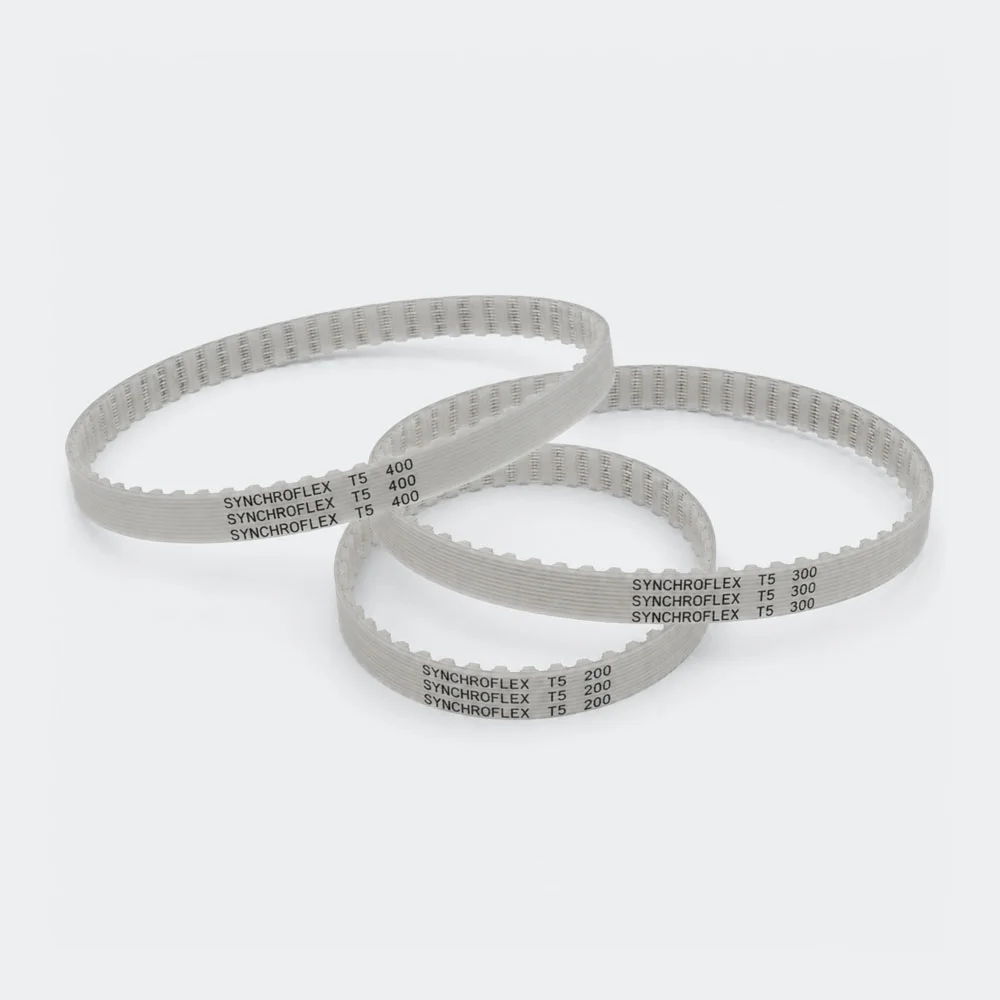


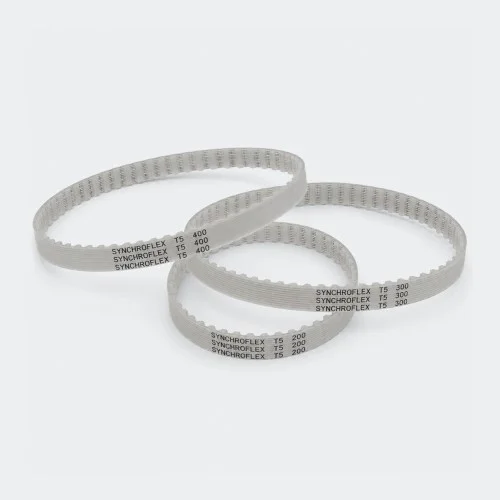
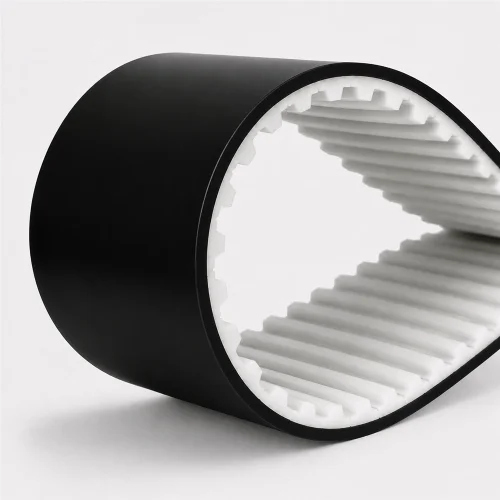
When a timing belt needs to be replaced correctly, the profile, pitch length and number of teeth are the first data that must be correct. The Conti Synchroflex T5 180 has a T5 profile, 5 mm tooth pitch, 180 mm pitch length and 36 teeth. This makes the product unique in terms of length and profile, while the belt width is selected separately on the product page. The belt is manufactured as an endless Conti Synchroflex PU timing belt with steel cord. This is the standard version in the specified profile. It must not be confused with a possible GEN III version or a double-sided DL belt with the same pitch length.
The list gathers the information normally used to identify a timing belt: nominal length, number of teeth, profile, material and make. It is important to read all the information together. Two belts can have the same pitch length but be incompatible if the tooth profile or tooth pitch is different. Conversely, a different width does not change the number of teeth as long as the profile and pitch length are the same.
The trapezoidal T-geometry is a standardized solution for synchronous transmission. The teeth mesh with corresponding grooves in the timing belt pulley, so that the speed ratio is maintained without slipping. The correct pitch is crucial: a T5 belt, for example, will not fit in an AT5 pulley simply because the tooth pitch is 5 mm in both places. The shape and clearance of the tooth flanks are different.
With the cast manufacturing method, the finished belt becomes an exact copy of a precision-machined shape. This is a major reason for the uniform tooth pitch and reproducible length. The steel cord is integrated into the polyurethane and contributes to position and angular precision. The design is suitable for synchronous drives, where a conventional elastic friction belt does not provide the desired repeatability.
The standard version is selected when the supplier's article data does not specify GEN III or DL. This is an important product distinction, because different versions can share both profile and length. Therefore, on this product page, it is the standard version that is described. The belt width can be selected, but the basic construction and tooth geometry are not changed.
Continental cites office machines, household appliances, positioning drives and control drives as examples for this profile family. The examples describe the general area of application of the profile, but do not constitute an approval for any specific installation. The final belt width and pretension must be selected based on the transmitted torque, starting and shock loads, operating time, pulley sizes, speed and the number of teeth in simultaneous engagement. For safety-critical or heavily loaded drives, an actual calculation should be made.
The number of teeth on the pulleys affects both the gear ratio, deflection and how many belt teeth carry the load. A small pulley may be necessary in a compact drive, but it should not be selected without considering the minimum profile requirements and any counter deflection. Use timing belt pulleys with 5 mm pitch and the correct T5 tooth shape, and check that the flanges do not damage the belt edge.
The belt must be able to be placed on the pulleys without force. If it can only be mounted by forcing it over a flange, the center distance or mounting procedure is incorrect. The pulley shafts must be aligned and the flanges must be smooth and undamaged. In the case of multi-shaft or counter-bent drives, the diameter and position of the rollers must be assessed separately. Correct pretensioning reduces the risk of tooth skipping without unnecessarily loading the bearings.
The belt width is not written in the product name because the same pitch length is collected on one product page. The starting pu is 6 mm. Integer widths from 6 to 50 mm can be selected on this product page. The original supplier widths for this length are 6, 8, 10, 12, 16, 20, 25, 32 and 50 mm. Other intermediate sizes are offered as cut-to-size versions of the same type of timing belt sleeve when they are within the selection shown. The number of teeth, pitch length and profile do not change when the width is changed.
A properly running timing belt should move smoothly without continuous contact against one flange. Regularly check the teeth for deformation, the back for ctiming bars and the edges for frayed areas. Abnormal noise or heat can be an early sign of incorrect tension or pulley failure. A systematic check of pulleys and belt is more effective than trying to hide symptoms with lubricant.
The standard material is specified for ambient temperatures from -30 °C to +80 °C. Applications close to the limits, especially below -10 °C or above +50 °C, may require special sizing. The molded PU belt is maintenance-friendly and does not require lubricant. Regular visual inspection is still relevant: look for ctiming bars, frayed edges, shiny tooth flanks, foreign body impressions and abnormal side contact. Sudden changes in noise or grooveing may indicate misalignment, too low tension or worn pulleys.
It is not enough to compare the total circumference of a belt. The correct replacement must have the same pitch, tooth profile and number of teeth as the existing drive. The width must match the pulleys and the required capacity, and a DL or GEN III version must be identified separately. If in doubt, pictures of the marking, tooth profile and pulleys can be used as a supplement, but a documented spare part designation is best.
Misalignment can cause the belt to wander towards a flange, causing edge pressure, heat and wear damage. It can also affect tooth engagement and reduce service life. Check both the parallelism of the shafts and the alignment of the pulleys.
The standard version is specified for ambient temperatures from -30 °C to +80 °C. At temperatures below -10 °C or above +50 °C, adapted sizing may be required.
The standard version is single-sided with teeth on the inside and a smooth back. It must run with the teeth in the corresponding tooth grooves; the back is not an alternative tooth side.
No. The Conti Synchroflex series is manufactured as cast, endless timing belts. The belt therefore does not have a welded joint around the circumference. The cast process provides a uniform tooth pitch around the entire belt and a strong bond between the polyurethane and the cast steel cord tension elements.
This should be avoided. The belt should be installed by adjusting the center distance or following the correct installation procedure for the machine. Forcing it over a flange can damage the cord pullers, teeth or belt edge. After installation, the pulleys must be parallel and the pretension must be correct.
The belt has 36 teeth. The number of teeth is calculated by dividing the pitch length of 180 mm by the tooth pitch of 5 mm. The result is 36, and this number can be used as an additional check when identifying an existing belt. A different number of teeth means a different pitch length.
The tooth pitch is the distance from one tooth to the next and is 5 mm for this profile. The pitch length is the entire nominal circumference in the cord line and is 180 mm. When the pitch length is divided by the tooth pitch, the 36 teeth of the belt are obtained.
The Conti Synchroflex series is designed for precise and fast synchronous drives, but the permissible speed depends on the profile, pulley diameter, belt width, load and peripheral speed. A high speed must therefore not be approved based on the product name alone; the drive must be calculated.
The product brings together the specified T5 profile and length on one side, so that the appropriate width can be selected without creating a separate item for each cut. The main technical data is 180 mm pitch length and 36 teeth. If in doubt about load or pulley compatibility, the drive should be calculated before ordering the belt.