Sold out
DISCOUNTED
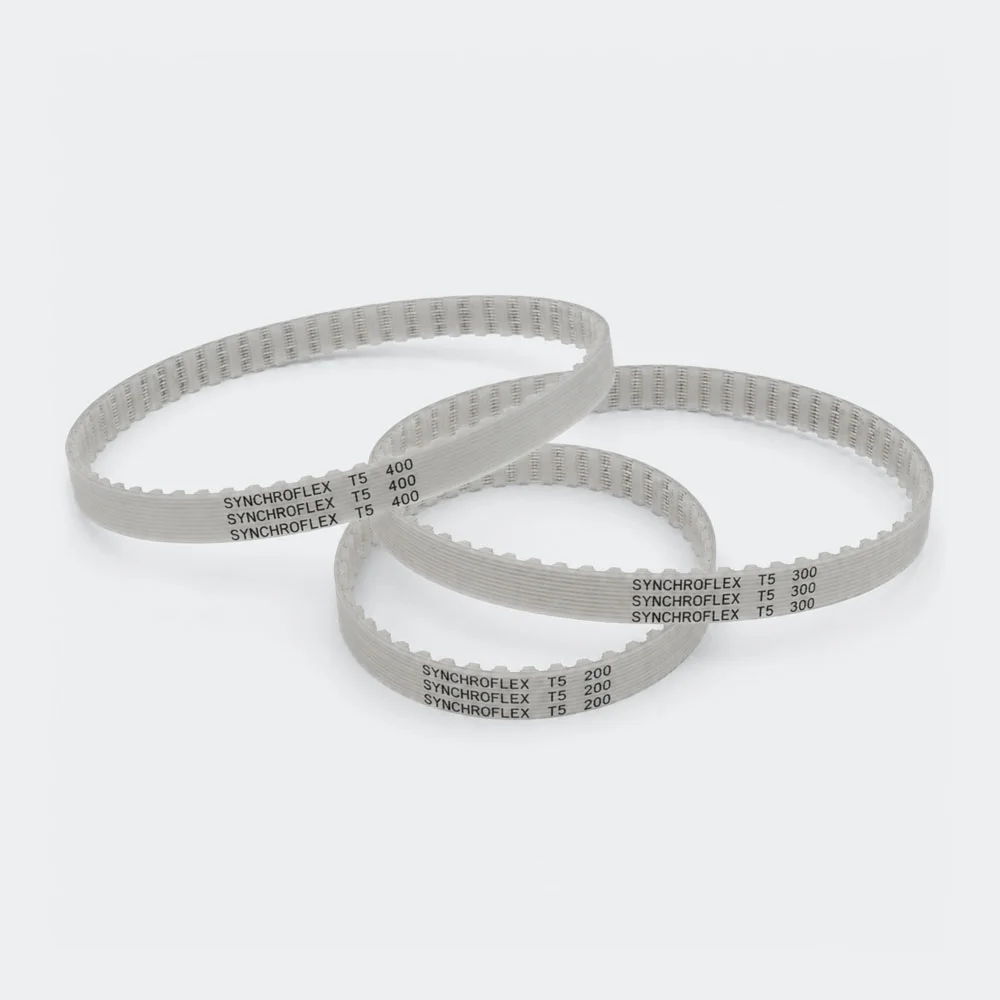


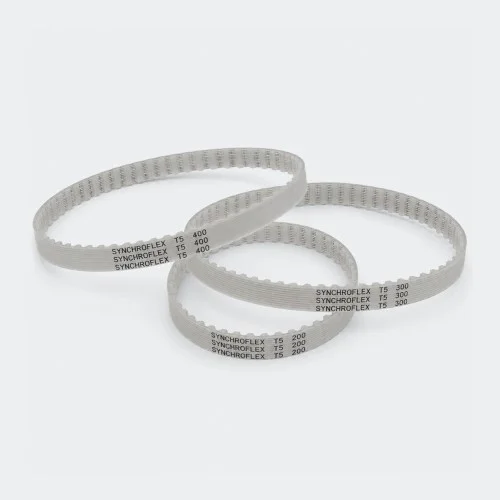
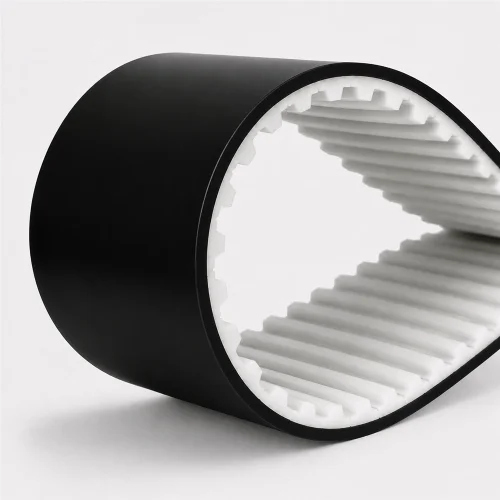
Conti Synchroflex T5 780 is an endless, cast polyurethane timing belt with 156 teeth, 5 mm tooth pitch and a pitch length of 780 mm. It is intended for synchronous power transmission, where the driving and driven shafts must follow a fixed tooth ratio without the slippage known from friction-based belt drives. The pitch length is the nominal length measurement in the belt cord line and is therefore the measurement that must be compared with the existing belt, the machine's spare parts data and the installed timing belt pulleys. This is the standard version in the specified profile. It must not be confused with a possible GEN III version or a double-sided DL belt with the same pitch length.
These specifications can be used as a check against the marking on the old belt or against the machine's spare parts list. The pitch length is not necessarily the same as a measurement across the outside of the belt, and the number of teeth is therefore often the safest additional check. If in doubt, both the belt and timing belt pulleys should be examined before ordering a replacement.
As a classic metric profile, the T-series is used in many machines where reliable synchronous movement is important. The tooth shape is trapezoidal, and the number in the profile designation indicates the tooth pitch in millimeters. The correct washer must therefore both have the same pitch and be manufactured for the T-profile. The wrong profile can lead to poor engagement, noise and rapid wear.
The endless PU construction combines low dead weight with high longitudinal rigidity. The steel cord tension elements are cast into the belt and are not intended to be exposed, damaged or sharply broken during installation. The wear resistance of the polyurethane and the strong bond to the cord are central to the belt's lifespan. Correct handling is therefore just as important as the correct choice of profile and length.
The product is the regular Conti Synchroflex standard version in the specified profile. Standard and GEN III may have the same pitch length and number of teeth, but they are different product series with different material construction and capacity data. The same applies to a DL belt, which has teeth on both sides. When reordering, the entire profile designation should therefore be checked, not just the length.
The application examples in the catalogue include office machines, household appliances, positioning drives and control drives. This shows that the profile can be used in both power transmission and motion control. However, the specific belt must only be finally selected when the machine's torque, speed, centre distance and pulley geometry are known. When simply replacing a spare part, the safest method is usually to copy the documented profile, length, design and width.
The standard material is specified for ambient temperatures from -30 °C to +80 °C. Applications close to the limits, especially below -10 °C or above +50 °C, may require special dimensioning. The timing belt operates without lubrication, and oil or grease should therefore not be added to dampen noise. The polyurethane is described as resistant to aging as well as simple oils, grease and petrol and to certain acids and bases. In the case of permanent contact, cleaning chemicals or unknown media, material compatibility should be specifically clarified.
This product line has been created with 6 mm as the base width because this is the width of the selected item and thus the SKU used for inventory control. Integer widths from 6 to 50 mm can be selected on this product page. The widths that appear as standard widths in the supplier data are marked separately in the options. The price surcharge is calculated as a percentage of the base width: doubling the width results in a surcharge of 100%. The technically necessary width should be selected according to the load and not only according to the price.
The pulleys and belt should be considered as a single tooth engagement. Correct T5 geometry ensures that the load is distributed over the tooth flanks rather than concentrated on tooth tips or edges. The drive ratio is selected by the number of teeth on the pulleys, while the belt's 156 teeth and 780 mm pitch length determine the required combination of pulleys and center distance. When changing the drive, the geometry should be calculated.
The belt must be able to be placed on the pulleys without force. If it can only be mounted by forcing it over a flange, the center distance or mounting procedure is incorrect. The pulley shafts must be aligned and the flanges must be smooth and undamaged. In the case of multi-shaft or counter-bent drives, the diameter and position of the rollers must be assessed separately. Correct pretensioning reduces the risk of tooth skipping without unnecessarily loading the bearings.
Troubleshooting should start with pu location of the damage. Edge wear is typically associated with grooveing and alignment, while tooth skipping can be associated with too low tension, load peaks or too few teeth in mesh. Ctiming bars on the back can be caused by too small rollers, back bending or environmental influences. Do not simply replace the belt without also finding the mechanical cause.
When replacing a spare part, the marking on the existing belt should be compared with the product name. Check the profile designation, pitch length, number of teeth, design and width. If the text on the belt has worn away, the number of teeth can be counted and the pitch can be assessed by measuring over several teeth. A single external length measurement is less reliable because the nominal length of the timing belt is indicated in the pitch line.
The tooth pitch is the distance from one tooth to the next and is 5 mm for this profile. The pitch length is the entire nominal circumference in the cord line and is 780 mm. When the pitch length is divided by the tooth pitch, the belt has 156 teeth.
No. The timing belt is designed for lubrication-free operation. Oil or grease should not be added to reduce noise as this may mask an alignment, pretension or worn pulley problem. Instead, keep the tooth mesh clean and check the cause of any abnormal noise.
Misalignment can cause the belt to wander towards a flange, causing edge pressure, heat and wear damage. It can also affect tooth engagement and reduce service life. Check both the parallelism of the shafts and the alignment of the pulleys.
The pitch length is the nominal length measured in the belt cord line where the steel cord tension elements are located. It is not the same as a random outer circumference measurement. For this belt, 780 mm pitch length corresponds to 156 teeth with 5 mm tooth pitch.
The standard version is single-sided with teeth on the inside and a smooth back. It must run with the teeth in the corresponding tooth grooves; the back is not an alternative tooth side.
Yes, the belt width can usually be measured directly on the flat back or between clean, undamaged edges. However, the width is only one part of the identification. The profile, pitch length, number of teeth and any DL or GEN III version must also be correct.
No, not without documented compatibility. The 5 mm tooth pitch describes the distance between the teeth, but the shape and clearance of the tooth flanks may differ. The belt must be used with pulleys manufactured for the T5 profile. Visual similarity is not sufficient documentation.
Count the teeth and check the pitch. 156 teeth times 5 mm gives 780 mm pitch length. Then compare the profile and design with the marking or the machine's spare parts list. A measurement around the outside of the belt alone is not accurate enough.
In summary, this is a Conti Synchroflex PU timing belt with a fixed geometry of 5 mm pitch, 156 teeth and 780 mm pitch length. The width is selected separately, but does not change the length or number of teeth. A safe replacement requires that the entire designation and the specific version match the machine documentation.