New
DISCOUNTED
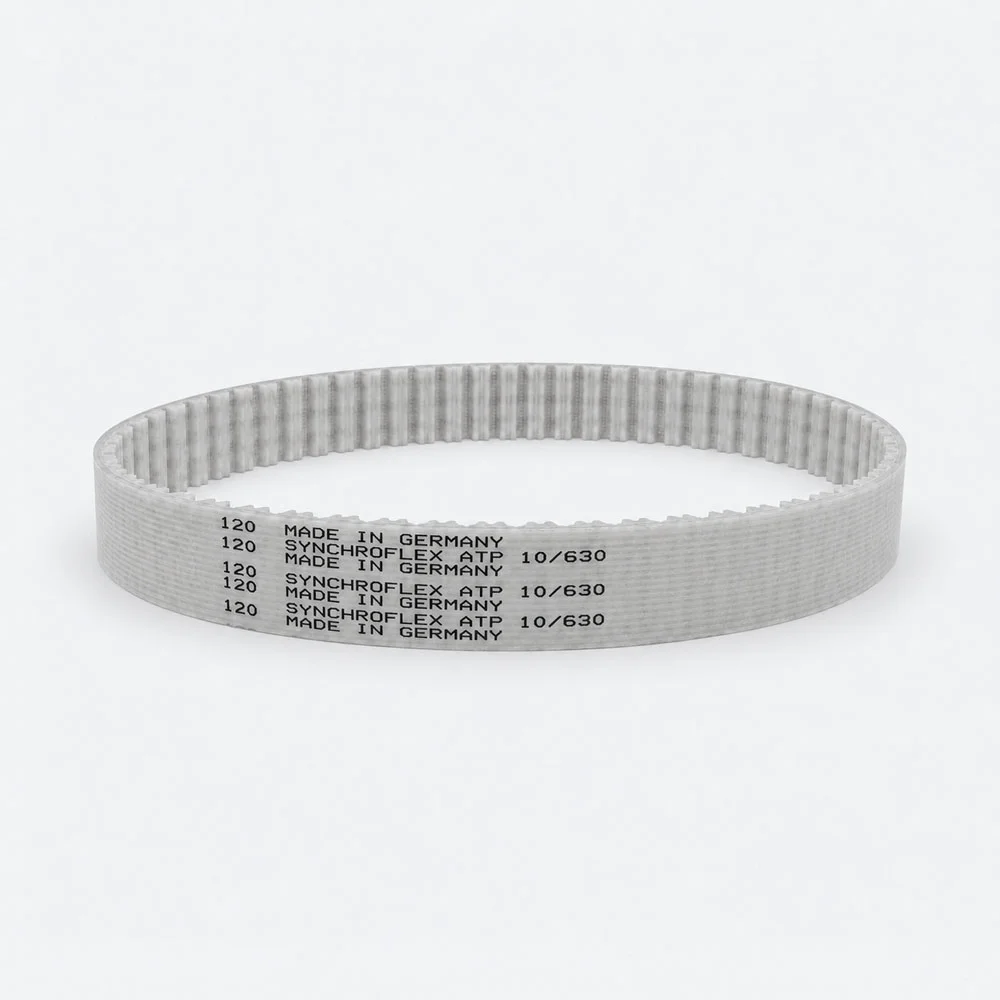
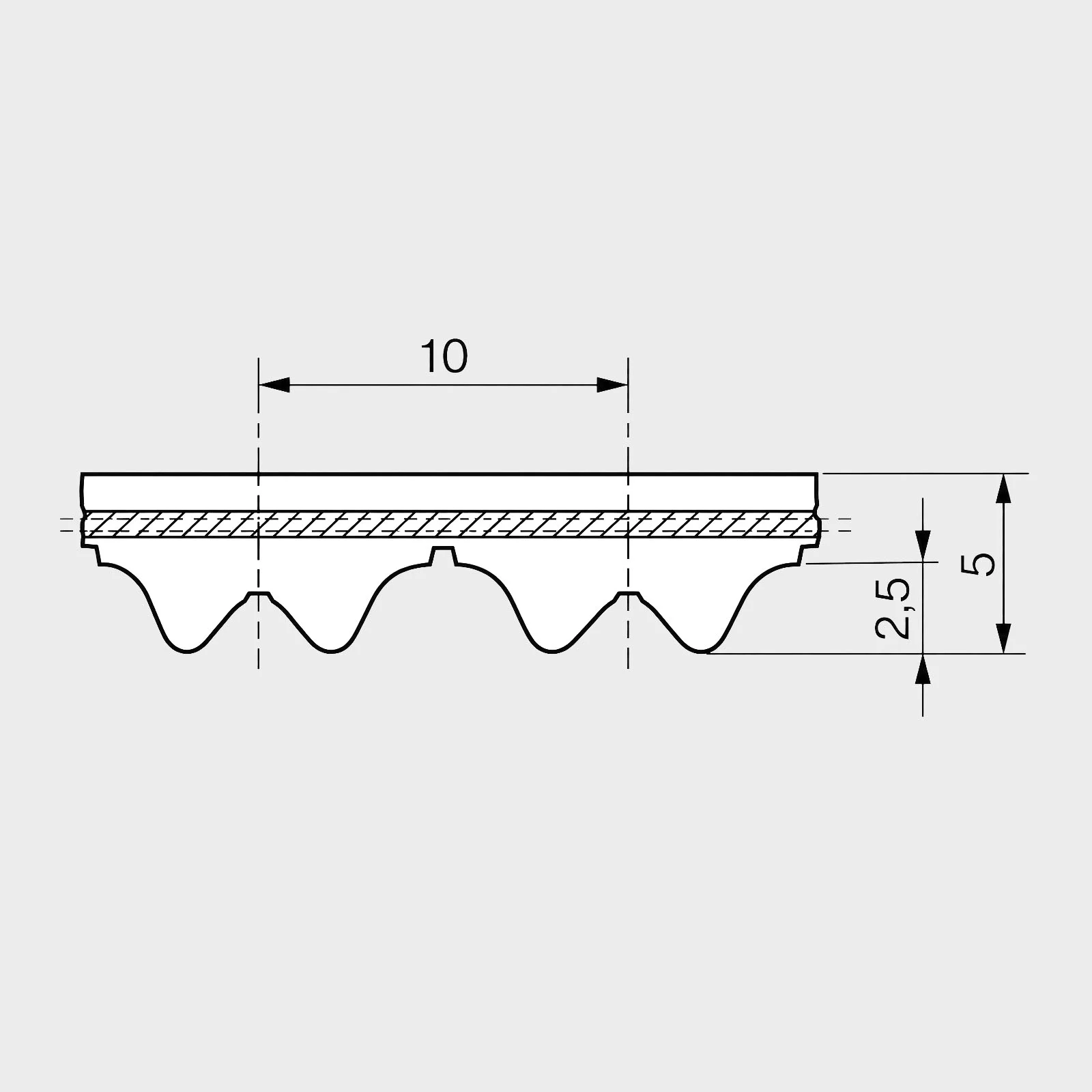

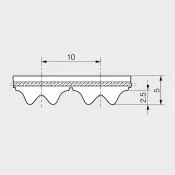


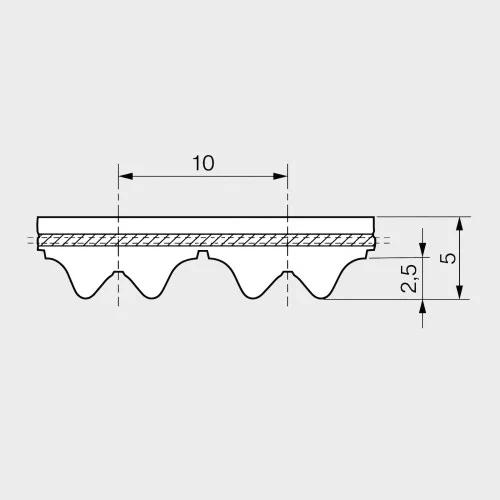
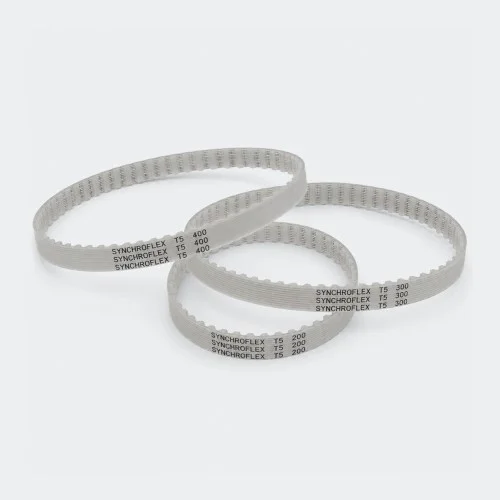
With 115 teeth spread over a pitch length of 1150 mm, the Conti Synchroflex ATP10 1150 is designed for precise transmission of rotation, stroke and position. The belt is cast endlessly in PU and has integrated steel cord tension elements that stabilize the length during normal operation. The nominal tooth pitch is 10 mm and the tooth profile must match the profile of the pulleys exactly. It is not sufficient for another belt to have approximately the same length or width. This is the standard version in the specified profile. It must not be confused with a possible GEN III version or a double-sided DL belt with the same pitch length.
The technical data below describes the part of the product that does not change when a different belt width is selected. Pitch length, tooth pitch and number of teeth remain identical for all width choices. However, the width affects the available belt cross-section width and the price calculated on the product page. Correct sizing must always take into account torque, speed, number of teeth in mesh, pulley diameters, service factor and any counter-bending.
ATP10 combines 10 mm metric pitch with a split tooth shape developed for higher loads and smoother engagement. The larger active tooth surface and the more even force distribution are key differences compared to classic trapezoidal profiles. When replacing, the ATP10 designation must therefore be confirmed on the belt, drawing or machine documentation. An AT10 pulley should not be assumed to be compatible without technical documentation.
The endless PU construction combines low dead weight with high longitudinal rigidity. The steel cord tension elements are cast into the belt and are not intended to be exposed, damaged or sharply broken during installation. The wear resistance of the polyurethane and the strong bond to the cord are central to the belt's lifespan. Correct handling is therefore just as important as the correct choice of profile and length.
This item is a single-sided standard design. The teeth are located on the inside of the belt, while the back is smooth. It should not be confused with a double-sided DL version or the red GEN III series. If the machine is originally dimensioned for a specific variant, a change should only be made after a technical assessment of load, pulleys and preload.
Continental cites machine tools, grinding machines, textile machines and power transmissions with high demands on tooth load as examples for this profile family. The examples describe the profile's general area of application, but do not constitute an approval for any specific installation. The final belt width and pretension must be selected based on the transmitted torque, starting and shock loads, operating time, pulley sizes, speed and the number of teeth in simultaneous engagement. For safety-critical or heavily loaded drives, an actual calculation should be made.
The standard material is specified for ambient temperatures from -30 °C to +80 °C. Applications close to the limits, especially below -10 °C or above +50 °C, may require special dimensioning. The timing belt operates without lubrication, and oil or grease should therefore not be added to dampen noise. The polyurethane is described as resistant to aging as well as simple oils, grease and petrol and to certain acids and bases. In the case of permanent contact, cleaning chemicals or unknown media, material compatibility should be specifically clarified.
This product line has been created with 16 mm as the base width because this is the width of the selected item and thus the SKU used for inventory control. Integer widths from 16 to 50 mm can be selected on this product page. The widths that appear as standard widths in the supplier data are marked separately in the options. The price surcharge is calculated as a percentage of the base width: doubling the width results in a surcharge of 100%. The technically necessary width should be selected according to the load and not only according to the price.
The pulleys and belt should be considered as a single tooth engagement. Correct ATP10 geometry ensures that the load is distributed over the tooth flanks rather than concentrated on tooth tips or edges. The drive ratio is selected by the number of teeth on the pulleys, while the belt's 115 teeth and 1150 mm pitch length determine the required combination of pulleys and center distance. When changing the drive, the geometry should be calculated.
Proper installation begins with clean, undamaged pulleys with the correct profile. Teeth and grooves should be checked for deposits, bars and wear before the new belt is fitted. The pretension should be based on the drive's calculation and should not be selected based on a random hand feel. After the initial run-in, it is a good idea to check grooveing, noise, temperature and whether the belt runs centrally.
A properly running timing belt should move smoothly without continuous contact against one flange. Regularly check the teeth for deformation, the back for ctiming bars and the edges for frayed areas. Abnormal noise or heat can be an early sign of incorrect tension or pulley failure. A systematic check of pulleys and belt is more effective than trying to hide symptoms with lubricant.
It is not enough to compare the total circumference of a belt. The correct replacement must have the same pitch, tooth profile and number of teeth as the existing drive. The width must match the pulleys and the required capacity, and a DL or GEN III version must be identified separately. If in doubt, pictures of the marking, tooth profile and pulleys can be used as a supplement, but a documented spare part designation is best.
Yes, the belt width can usually be measured directly on the flat back or between clean, undamaged edges. However, the width is only one part of the identification. The profile, pitch length, number of teeth and any DL or GEN III version must also be correct.
The pitch length is the nominal length measured in the belt cord line where the steel cord tension elements are located. It is not the same as a random outer circumference measurement. For this belt, 1150 mm pitch length corresponds to 115 teeth with 10 mm tooth pitch.
The steel cord tension members absorb the longitudinal tensile load and provide high longitudinal stiffness. This helps maintain pitch and position during operation. The cord must not be kinked, exposed or damaged during installation, as local damage can weaken the belt.
No. The Conti Synchroflex series is manufactured as cast, endless timing belts. The belt therefore does not have a welded joint around the circumference. The cast process provides a uniform tooth pitch around the entire belt and a strong bond between the polyurethane and the cast steel cord tension elements.
No. This is a cast endless timing belt with a fixed pitch length. It can be cut to width within the available options, but the circumference and number of teeth cannot be changed. If the length needs to be changed, a different cast belt size is required.
No. The timing belt is designed for lubrication-free operation. Oil or grease should not be added to reduce noise as this may mask an alignment, pretension or worn pulley problem. Instead, keep the tooth mesh clean and check the cause of any abnormal noise.
Misalignment can cause the belt to wander towards a flange, causing edge pressure, heat and wear damage. It can also affect tooth engagement and reduce service life. Check both the parallelism of the shafts and the alignment of the pulleys.
The product brings together the specified ATP10 profile and length on one side, so that the appropriate width can be selected without creating a separate item for each cut. The main technical data is 1150 mm pitch length and 115 teeth. In case of doubt about load or pulley compatibility, the drive should be calculated before ordering the belt.