New
DISCOUNTED
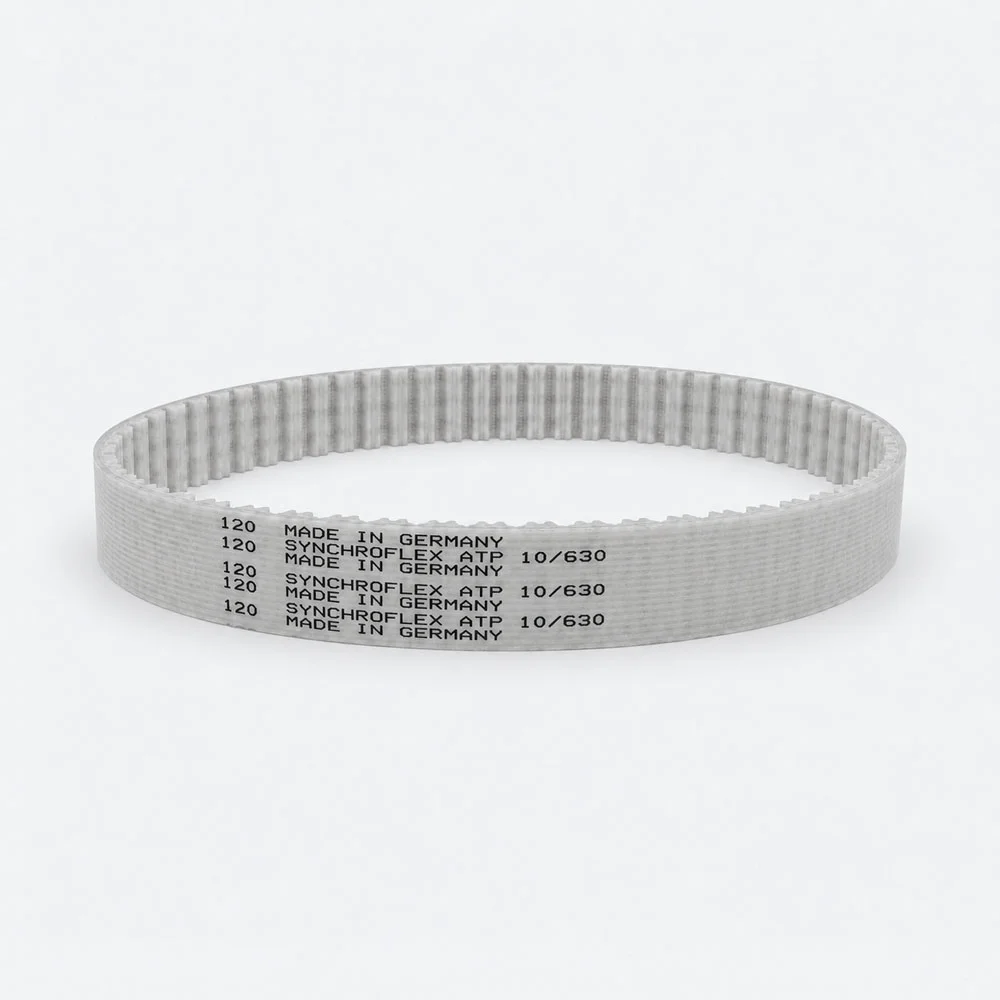
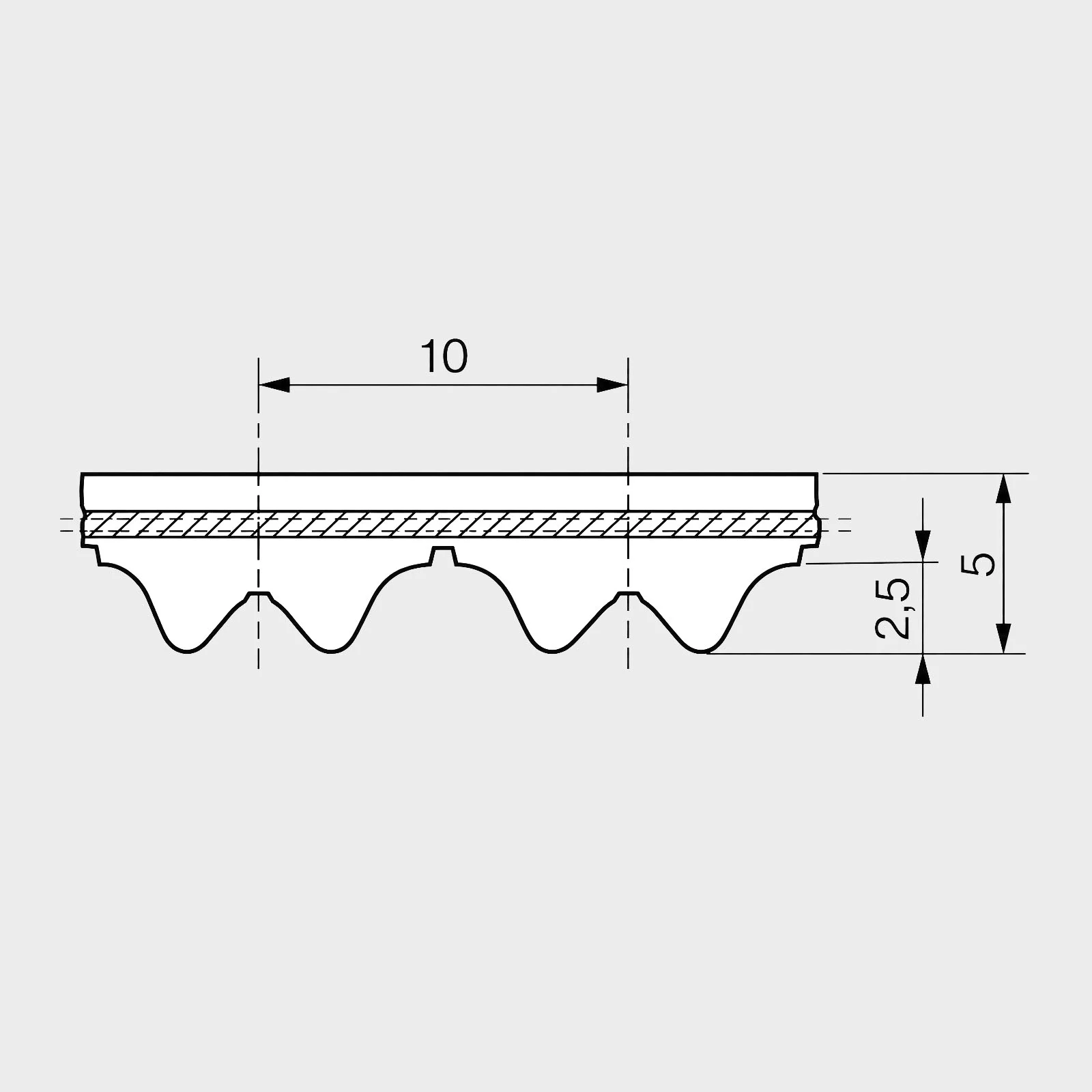

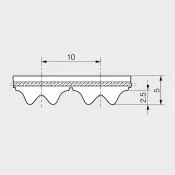


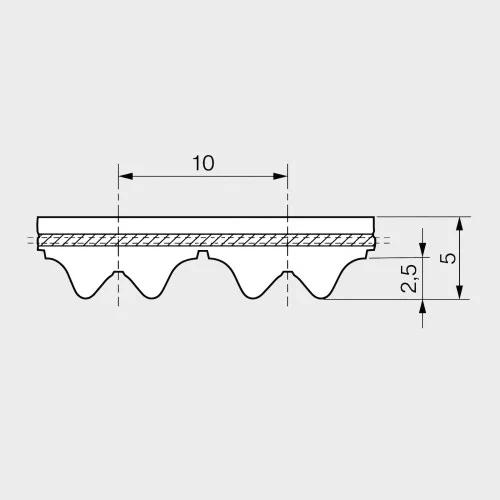
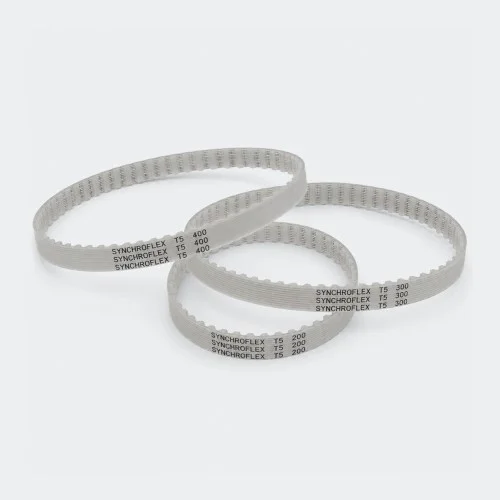
The Conti Synchroflex ATP10 1080 is an endless, cast polyurethane timing belt with 108 teeth, 10 mm tooth pitch and a pitch length of 1080 mm. It is intended for synchronous power transmission, where the driving and driven shafts must follow a fixed tooth ratio without the slippage known from friction-based belt drives. The pitch length is the nominal length measurement in the belt's cord line and is therefore the measurement that must be compared with the existing belt, the machine's spare part data and the installed timing belt pulleys. This is the standard version in the specified profile. It must not be confused with a possible GEN III version or a double-sided DL belt with the same pitch length.
The list gathers the information normally used to identify a timing belt: nominal length, number of teeth, profile, material and make. It is important to read all the information together. Two belts can have the same pitch length but be incompatible if the tooth profile or tooth pitch is different. Conversely, a different width does not change the number of teeth as long as the profile and pitch length are the same.
ATP10 combines 10 mm metric pitch with a split tooth shape developed for higher loads and smoother engagement. The larger active tooth surface and the more even force distribution are key differences compared to classic trapezoidal profiles. When replacing, the ATP10 designation must therefore be confirmed on the belt, drawing or machine documentation. An AT10 pulley should not be assumed to be compatible without technical documentation.
With the cast manufacturing method, the finished belt becomes an exact copy of a precision-machined shape. This is a major reason for the uniform tooth pitch and reproducible length. The steel cord is integrated into the polyurethane and contributes to position and angular precision. The design is suitable for synchronous drives, where a conventional elastic friction belt does not provide the desired repeatability.
The product is the regular Conti Synchroflex standard version in the specified profile. Standard and GEN III may have the same pitch length and number of teeth, but they are different product series with different material construction and capacity data. The same applies to a DL belt, which has teeth on both sides. When reordering, the entire profile designation should therefore be checked, not just the length.
This product line has been created with 16 mm as the base width because this is the width of the selected item and thus the SKU used for inventory control. Integer widths from 16 to 50 mm can be selected on this product page. The widths that appear as standard widths in the supplier data are marked separately in the options. The price surcharge is calculated as a percentage of the base width: doubling the width results in a surcharge of 100%. The technically necessary width should be selected according to the load and not only according to the price.
The application examples in the catalogue include machine tools, grinding machines, textile machines and power transmissions with high demands on the tooth load. This shows that the profile can be used in both power transmission and motion control. However, the specific belt must only be finally selected when the machine's torque, speed, center distance and pulley geometry are known. When simply replacing a spare part, the safest method is usually to copy the documented profile, length, design and width.
It is not enough to compare the total circumference of a belt. The correct replacement must have the same pitch, tooth profile and number of teeth as the existing drive. The width must match the pulleys and the required capacity, and a DL or GEN III version must be identified separately. If in doubt, pictures of the marking, tooth profile and pulleys can be used as a supplement, but a documented spare part designation is best.
The tooth profile of the timing belt pulleys must correspond to the belt's ATP10 and their pitch must be 10 mm. The transmission ratio is determined by the ratio of the number of teeth on the pulleys, not by the width of the belt. A larger pulley usually reduces the bending load, while a very small pulley gives more bending per revolution. The angle of engagement and the number of teeth in mesh must be sufficient for the current load.
The belt must be able to be placed on the pulleys without force. If it can only be mounted by forcing it over a flange, the center distance or mounting procedure is incorrect. The pulley shafts must be aligned and the flanges must be smooth and undamaged. In the case of multi-shaft or counter-bent drives, the diameter and position of the rollers must be assessed separately. Correct pretensioning reduces the risk of tooth skipping without unnecessarily loading the bearings.
Early damage is often caused by conditions surrounding the belt rather than the material itself. Bent shafts, worn tooth grooves, foreign objects and incorrect pretensioning can all shorten the service life. In the event of a belt break, the pulleys should therefore be cleaned and inspected before the new belt is fitted. Also check whether load conditions or start-stop cycles have changed since the original design.
The standard material is specified for ambient temperatures from -30 °C to +80 °C. Applications close to the limits, especially below -10 °C or above +50 °C, may require special sizing. The molded PU belt is maintenance-friendly and does not require lubricant. Regular visual inspection is still relevant: look for ctiming bars, frayed edges, shiny tooth flanks, foreign body impressions and abnormal side contact. Sudden changes in noise or grooveing may indicate misalignment, too low tension or worn pulleys.
No. All width choices on this product page have the same pitch length of 1080 mm and the same number of teeth of 108. Only the width of the belt, and thus the price and possible load capacity, changes. The width must still match the pulleys and the technical dimensioning.
Misalignment can cause the belt to wander towards a flange, causing edge pressure, heat and wear damage. It can also affect tooth engagement and reduce service life. Check both the parallelism of the shafts and the alignment of the pulleys.
The Conti Synchroflex series is designed for precise and fast synchronous drives, but the permissible speed depends on the profile, pulley diameter, belt width, load and peripheral speed. A high speed must therefore not be approved based on the product name alone; the drive must be calculated.
The possibility depends on the profile, cord design, the diameter of the rollers and the specific belt routing. Counter-bending increases the bending load and must be included in the dimensioning. A roller on the belt back must have sufficient diameter and be positioned so that tooth engagement and grooveing are not impaired.
The belt has 108 teeth. The number of teeth is calculated by dividing the pitch length of 1080 mm by the tooth pitch of 10 mm. The result is 108, and this number can be used as an additional check when identifying an existing belt. A different number of teeth means a different pitch length.
This product is the standard version. GEN III is a separate reinforced series with red high-performance PU and denser, two-filament steel cord. The same profile and length therefore do not mean that the products are identical.
The tooth engagement provides a positive, synchronous transmission without the normal slippage of a friction belt. This makes the profile relevant for positioning tasks, but the achievable accuracy also depends on the quality of the pulleys, shaft play, belt pretension, load and the overall machine design.
The product brings together the specified ATP10 profile and length on one side, so that the appropriate width can be selected without creating a separate item for each cut. The main technical data is 1080 mm pitch length and 108 teeth. If in doubt about load or pulley compatibility, the drive should be calculated before ordering the belt.