New
DISCOUNTED
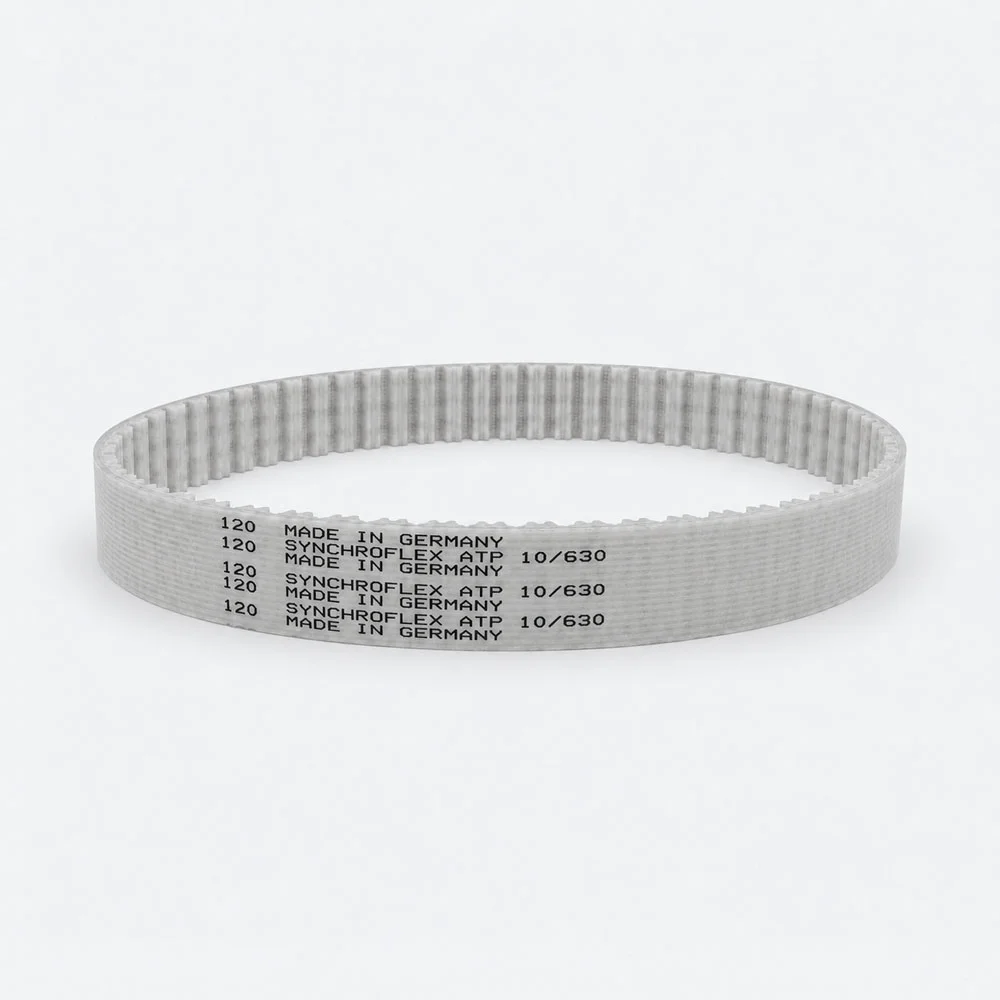



The Conti Synchroflex ATP10 840 is an endless, cast polyurethane timing belt with 84 teeth, 10 mm tooth pitch and a pitch length of 840 mm. It is intended for synchronous power transmission, where the driving and driven shafts must follow a fixed tooth ratio without the slippage known from friction-based belt drives. The pitch length is the nominal length measurement in the belt's cord line and is therefore the measurement that must be compared with the existing belt, the machine's spare part data and the installed timing belt pulleys. This is the standard version in the specified profile. It must not be confused with a possible GEN III version or a double-sided DL belt with the same pitch length.
The list gathers the information normally used to identify a timing belt: nominal length, number of teeth, profile, material and make. It is important to read all the information together. Two belts can have the same pitch length but be incompatible if the tooth profile or tooth pitch is different. Conversely, a different width does not change the number of teeth as long as the profile and pitch length are the same.
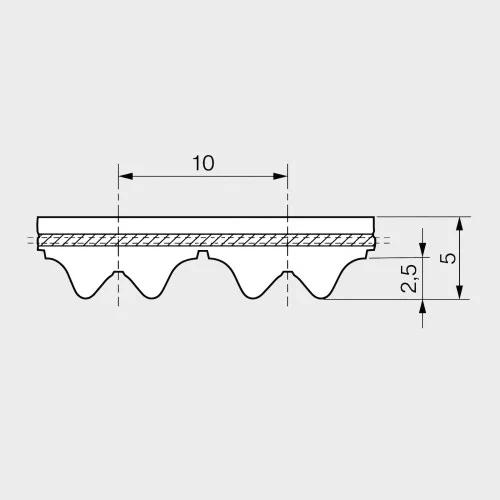
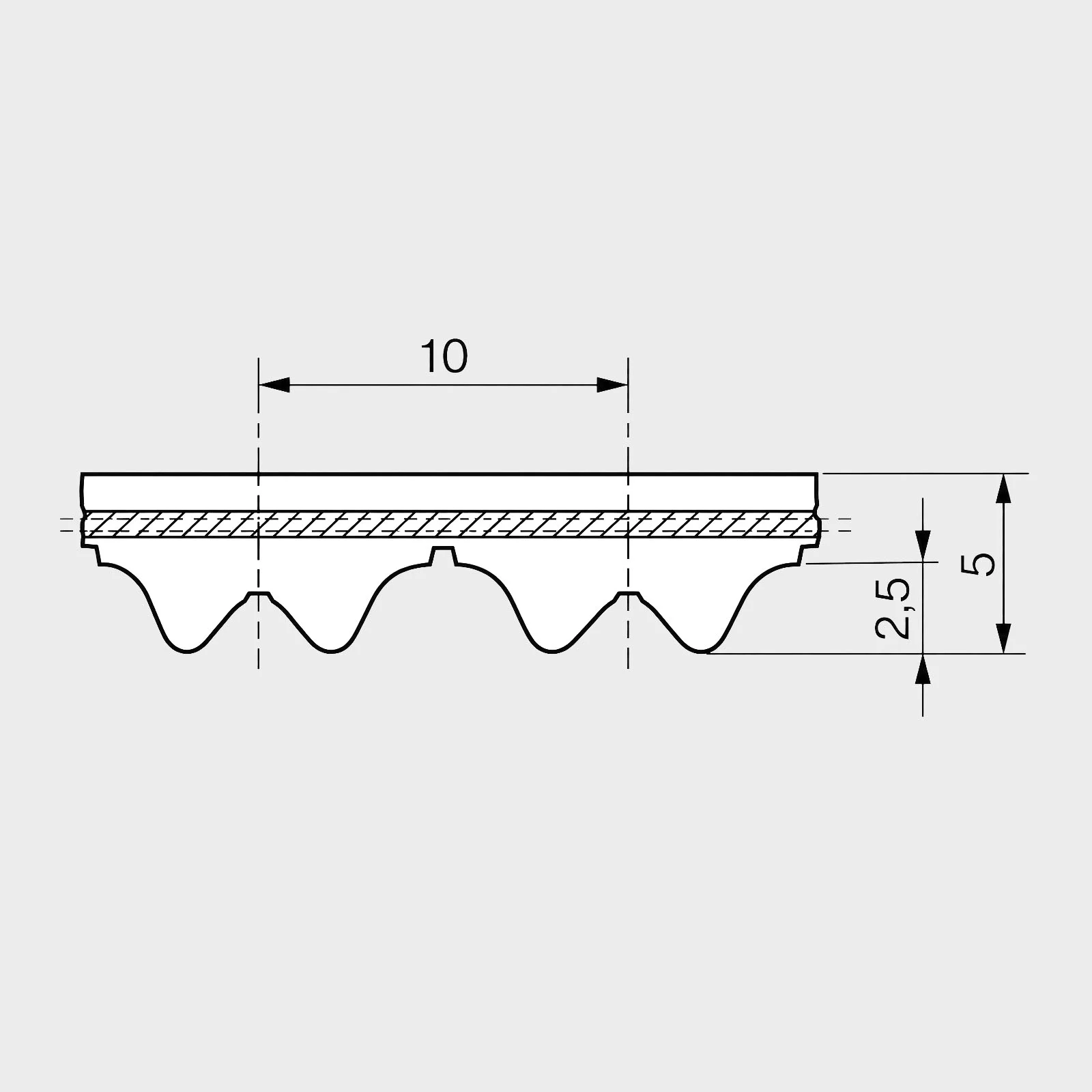
The characteristic ATP tooth geometry distributes the load over two load-bearing areas instead of one traditional trapezoidal tooth peak. It is designed to improve force distribution and reduce local stresses in the tooth mesh. The profile should not be treated as a regular AT10 belt, even though both have a 10 mm tooth pitch; the tooth shape is different and the pulleys must match the selected profile.
The endless PU construction combines low dead weight with high longitudinal rigidity. The steel cord tension elements are cast into the belt and are not intended to be exposed, damaged or sharply broken during installation. The wear resistance of the polyurethane and the strong bond to the cord are central to the belt's lifespan. Correct handling is therefore just as important as the correct choice of profile and length.
This item is a single-sided standard design. The teeth are located on the inside of the belt, while the back is smooth. It should not be confused with a double-sided DL version or the red GEN III series. If the machine is originally dimensioned for a specific variant, a change should only be made after a technical assessment of load, pulleys and preload.
Continental cites machine tools, grinding machines, textile machines and power transmissions with high demands on tooth load as examples for this profile family. The examples describe the profile's general area of application, but do not constitute an approval for any specific installation. The final belt width and pretension must be selected based on the transmitted torque, starting and shock loads, operating time, pulley sizes, speed and the number of teeth in simultaneous engagement. For safety-critical or heavily loaded drives, an actual calculation should be made.
The number of teeth on the pulleys affects both the gear ratio, deflection and how many belt teeth carry the load. A small pulley may be necessary in a compact drive, but it should not be selected without considering the minimum profile requirements and any counter deflection. Use timing belt pulleys with 10 mm pitch and the correct ATP10 tooth shape, and check that the flanges do not damage the belt edge.
Proper installation begins with clean, undamaged pulleys with the correct profile. Teeth and grooves should be checked for deposits, bars and wear before the new belt is fitted. The pretension should be based on the drive's calculation and should not be selected based on a random hand feel. After the initial run-in, it is a good idea to check grooveing, noise, temperature and whether the belt runs centrally.
The basic price applies to 16 mm, and the other widths are calculated with the same percentage logic as the existing PU timing belts in the webshop. Integer widths from 16 to 50 mm can be selected on this product page. A width of twice the basic width therefore costs 100% more, while a width of one and a half times the basic width gives approximately a 50% surcharge. This price rule is a webshop calculation; it does not replace a technical dimensioning of the belt's load-bearing capacity.
Uniform light polishing of the tooth flanks may be normal, but localised spalling, ctiming baring or severe wear should be investigated. Wear on one edge often indicates misalignment or persistent flange contact. Damage to tooth tips may be due to incorrect profile, foreign bodies or inadequate engagement. If cord becomes visible or the belt has a sharp break, it should not continue in service without assessment.
The standard material is specified for ambient temperatures from -30 °C to +80 °C. Applications close to the limits, especially below -10 °C or above +50 °C, may require special sizing. The molded PU belt is maintenance-friendly and does not require lubricant. Regular visual inspection is still relevant: look for ctiming bars, frayed edges, shiny tooth flanks, foreign body impressions and abnormal side contact. Sudden changes in noise or grooveing may indicate misalignment, too low tension or worn pulleys.
The product's 84 teeth provide a convenient length check. Multiplying the number of teeth by 10 mm gives a pitch length of 840 mm. If an existing belt has a different number of teeth, it is not the same size, even though it may look almost the same length. Also check that the teeth on the pulleys match the ATP10; the same pitch number alone is not always sufficient.
The number of teeth links the pitch of the profile to the nominal length of the belt. For this size, 84 teeth at 10 mm pitch gives a length of 840 mm. It is a simple check that often reveals faults that are not visible by a quick comparison of two loose belts.
Store the belt in a dry, clean place away from direct sunlight, ozone, strong heat or chemical fumes. It should be free from sharp bends and without heavy loads on top. Avoid hanging a small belt over a sharp hook as this can cause local deformation.
Not necessarily. A larger width provides a more active belt cross-section and can increase the permissible load, but the drive capacity also depends on the profile, number of teeth in mesh, pulley size, speed, load factor and preload. The width should be selected by an overall calculation.
Misalignment can cause the belt to wander towards a flange, causing edge pressure, heat and wear damage. It can also affect tooth engagement and reduce service life. Check both the parallelism of the shafts and the alignment of the pulleys.
No, not without documented compatibility. The 10 mm tooth pitch describes the distance between the teeth, but the shape and clearance of the tooth flanks may differ. The belt must be used with pulleys manufactured to the ATP10 profile. Visual similarity is not sufficient documentation.
The standard version is single-sided with teeth on the inside and a smooth back. It must run with the teeth in the corresponding tooth grooves; the back is not an alternative tooth side.
The documented supplier widths for this size include 16, 20, 25, 32 and 50 mm. The product page may also show intermediate sizes as cut widths when they are within the allowed range. This does not change the tooth profile or length, but the price is calculated based on the base width.
The product brings together the specified ATP10 profile and length on one side, so that the appropriate width can be selected without creating a separate item for each cut. The main technical data is 840 mm pitch length and 84 teeth. If in doubt about load or pulley compatibility, the drive should be calculated before ordering the belt.